Following recent attacks by Israel and U.S, a delegation from the National Commission for UNESCO visited the historical monuments of Isfahan, documenting the extent of damage to murals, tiles, and the structures of buildings.
Iran (IMNA) - in the wake of the attacks by the Zionist and American regimes on Isfahan, which exposed the "Pearl of Iran" to a difficult trial, and whose impact even affected its steadfast structures, the National Commission for UNESCO in Iran undertook an emergency visit to the city on Sunday, March 10th.
The purpose of this mission was not only to assess the material damage but also to delve into the depth of the cultural and civilizational impact of these events on the history of this land – a history inscribed on the walls of these monuments.
Visiting Historical Areas and Evidence of War Crimes
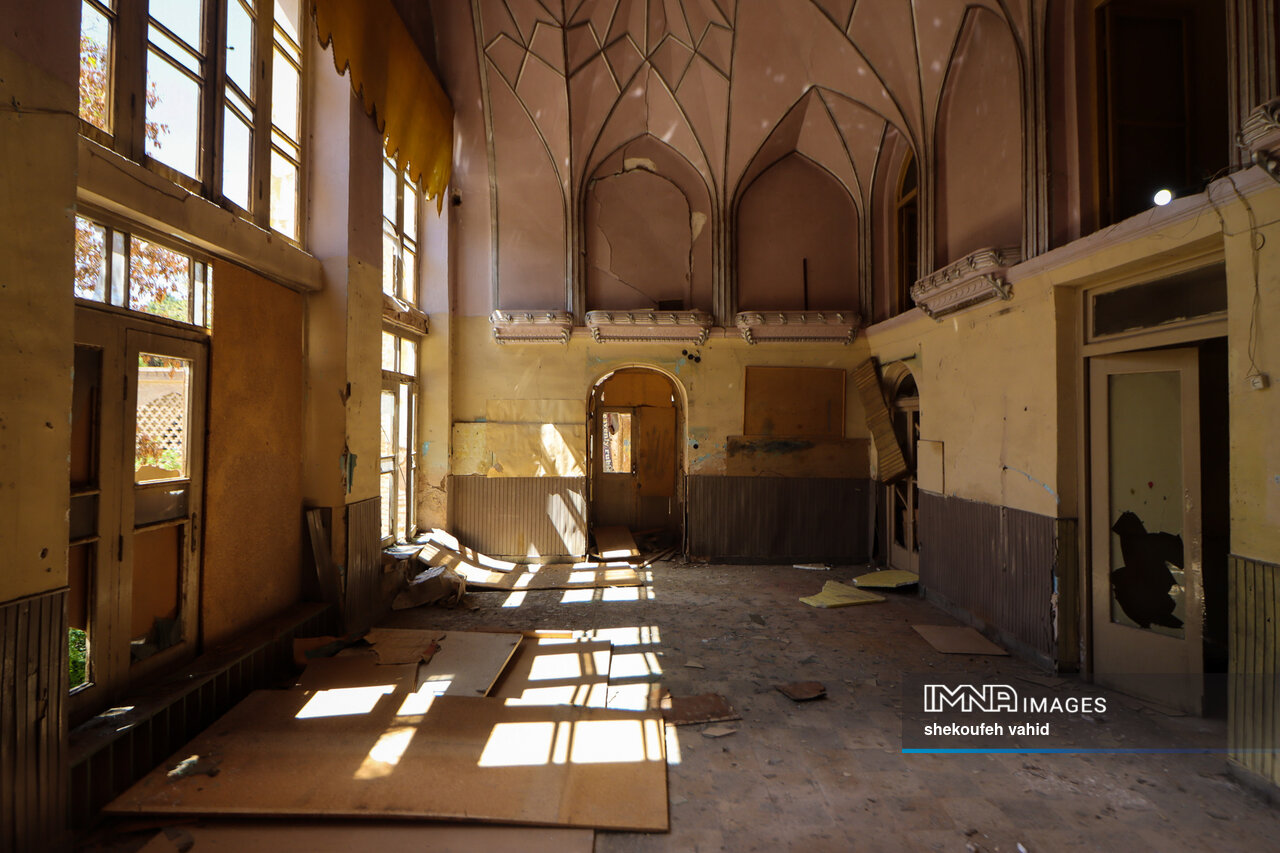
The delegation's first destination was Rakib House (the residence of Prince Masoud Mirza Qajar, a legacy of the bittersweet era of Zill-os-Sultan). Here, we observed cracks in the stained-glass windows and wooden frames, seemingly adding illegible lines to the authenticity of this building.
Rokib House in Isfahan, dating back to the 11th century AH, is located near a significant number of historical sites in the city. The building was constructed during the reign of Shah Abbas I. Based on the name of the house and existing documents from the Safavid era, it appears that the necessary equipment for equestrian activities and horse racing was typically stored here ("Rokib" also referred to a gemstone, and given that the first completed and utilized palace of Shah Abbas I was the small Four Gardens Palace, it highlights the building's importance).
The stone facades and sturdy ceilings of the building showed signs of cracking, indicative of the severe pressures exerted on this patient structure. This defect was not merely a structural break but was perceived as a weakening of its historical spirit.
The route then led to the Safavid Diwan-Khaneh (now a mirror reflecting the Timurid era). In this hall, once a center of governance and authority, noticeable cracks and fissures were observed among its steadfast columns.
The Sheikh Islam House, dating back to the Safavid and Qajar periods, is located in Isfahan and was the residence of Allama Mohaqqeq Sabzevari, the Sheikh al-Islam of Isfahan, and his descendants. It was registered as a national heritage site on September 29, 1974.
Houshang Fartousi, Secretary-General of the National Commission for UNESCO, registered these signs and emphasized the necessity of "reviving" these columns – a term that ostensibly means restoration, but implies breathing new life into a building scarred by the passage of time.
Next, the delegation proceeded to Ali Qapu Palace in Naqsh-e Jahan Square. Here, we witnessed color fading and deterioration in some of the mural paintings and delicate artworks. It seemed as though fate had snatched the paintbrush from the hands of the artists, casting a dark shadow over the golden canvas of history.
This damage was not only a blow to aesthetic beauty but also a challenge to the visual memory of this nation. This site was nationally registered in 1931 (No. 104) and was built in 1054 AH (1633 AD). Ali Qapu Palace was built on the foundation of a building from the Timurid era. During the transfer of the capital of Iran from Qazvin to Isfahan and before it was transformed into Ali Qapu Palace, the Timurid-era building was chosen as the place to carry out government affairs, but it gradually transformed and was eventually converted into the beautiful and magnificent Ali Qapu Palace between 973 and 977 AD, and designated as the government headquarters and residence of the Safavid dynasty.
The Dome of Sheikh Lotfollah Mosque, a Masterpiece of the Undisputed Safavid Architects, Was Also Not Spared by These Events. The precise details of this transgression require deeper investigation, but the mere fact that this sacred building has been affected is a source of deep regret and sorrow.
Finally, the Imam (RA) Mosque, whose grandeur seemed to demand a heavier price. The impact of the events had affected not only its colorful and captivating tiles but also had created frightening and worrying cracks in its mihrab. The mihrab, the spiritual qibla and the pinnacle of artistic expression in mosque architecture, and these cracks are not only a structural warning but also a bitter allegory of the ruptures that can occur in societies.
This visit was more than just a report on stone, plaster, and tiles; it was a journey into the depths of history and civilization. The historical buildings of Isfahan do not merely hold bricks and mortar but embody the soul and spirit of a nation. Damage to these ancient areas is a reflection of damage to national identity – as if history has sustained a wound that requires a deeper understanding and a higher resolve to heal. These events serve as a reminder that heritage is a precious trust that requires vigilance and national determination to keep the shadows of harm away from these human treasures.




Your Comment