At dawn in the outskirts of Bojnord, the air carries a sweetness that lingers even before the day warms. It comes from the wild meadows that blanket North Khorasan — landscapes where thyme, clover and fruit blossoms open each spring and summon the region’s most tireless workers: bees.
Iran (IMNA) - For generations, beekeeping has been woven into the rural identity of this northeastern province. What appears at a distance to be ordinary pastureland is, for local families, the heart of a livelihood built on patience, precision and a deep trust in nature’s timing.
Beekeepers in Bojnord speak often about rhythm — the slow, predictable cycle of tending hives, feeding colonies, and waiting for the season’s first nectar flow. But in recent years that rhythm has shifted. Weather patterns have become less forgiving; blossoms open early, rains linger late, and the delicate balance between flower and pollinator grows more fragile.
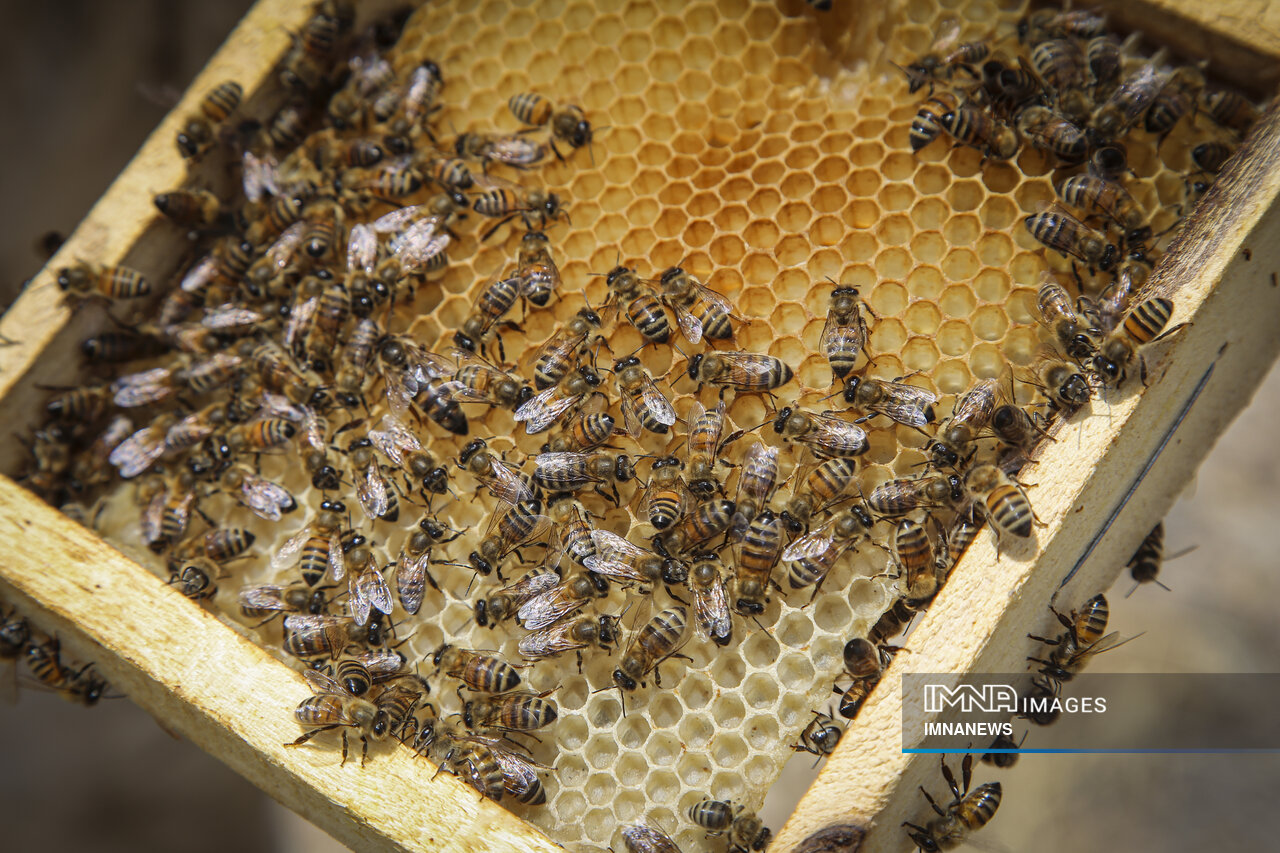
Yet the commitment remains. Many families move their hives several times a year, following the bloom across valleys and foothills. Others have learned to redesign hive structures to keep colonies cooler in summer and protected during unpredictable cold snaps. These quiet innovations rarely make headlines, but they underpin a region where honey is not just food — it is economy.
North Khorasan is now considered one of Iran’s notable honey-producing areas, supplying markets across the country with varieties shaped by the region’s unique flora. For small towns, honey sales often fill the economic gap left by declining traditional agriculture, providing income that is both flexible and resilient.
But what sets Bojnord’s beekeepers apart is not production volume; it is the philosophy behind their work. Many describe beekeeping not as extraction but as partnership — an understanding that the health of their hives mirrors the health of their land. When the pastures thrive, so do the bees. When the climate falters, both feel the strain.
As the country debates sustainable agriculture and rural revitalisation, the story unfolding in Bojnord offers a quiet, grounded example. It shows how a community can anchor its future in practices that respect its landscape rather than exhaust it, and how a small insect can sustain not only ecosystems but entire families.
In a region where life often moves at the pace of the seasons, honey remains both a product and a symbol — a reminder that even in uncertain times, sweetness can still be coaxed from the earth through care, patience and the old, enduring logic of the land.




Your Comment