Lake Urmia — once the broad, brackish lung of northwestern Iran, long described as the largest inland lake in Iran, the largest salt lake in the Middle East and among the world’s great saline basins — teeters now on the edge of ecological collapse.
Iran (IMNA) - Recent official measurements show the lake’s water surface and volume have plunged to alarmingly low levels: by early August 2025 the lake’s water-surface elevation had fallen to 1,269.74 metres above sea level, its surface area reduced to roughly 581 square kilometres, and its remaining water volume reduced to about 500 million cubic metres — barely a quarter of what was recorded one year earlier.
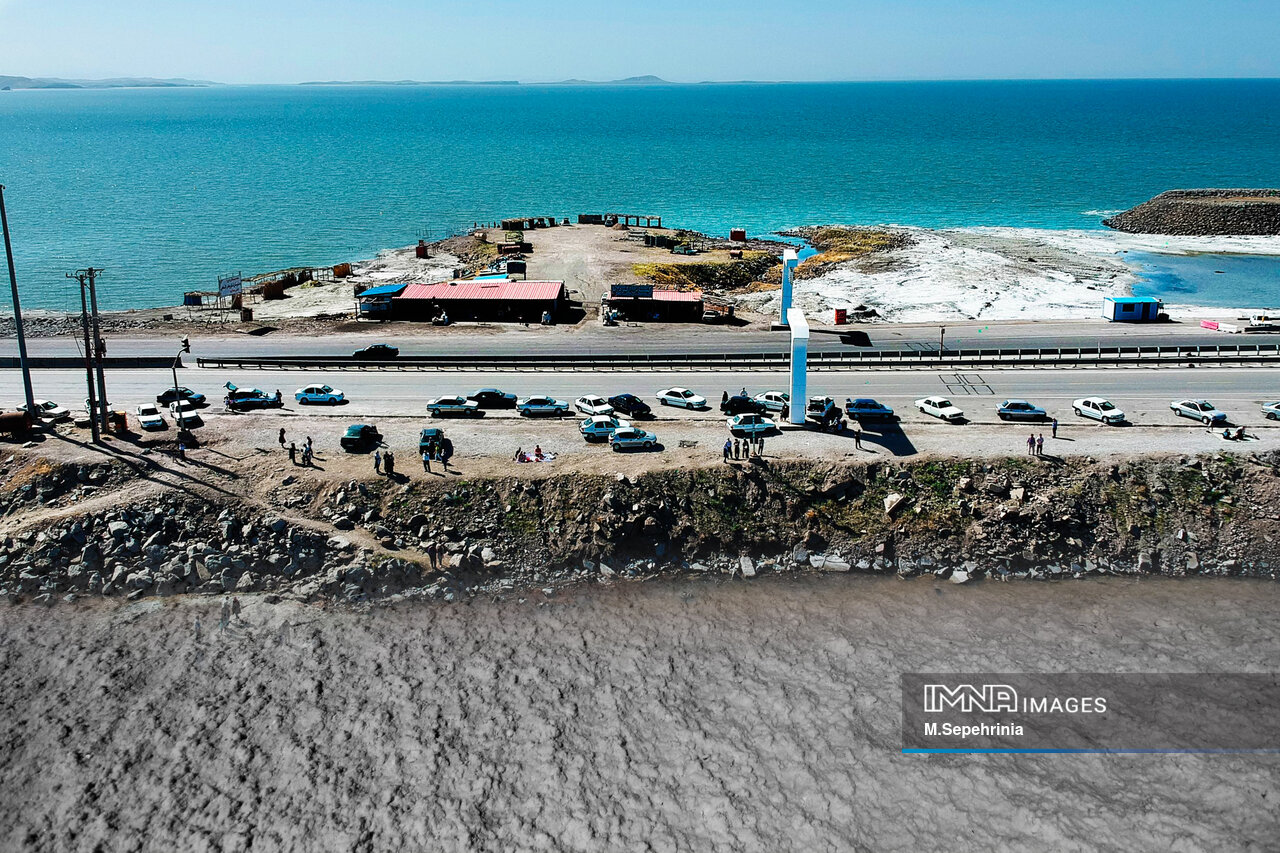
To place those numbers in context: in August 2024 Lake Urmia still held roughly 2 billion cubic metres of water and covered a far larger area. The deterioration in a single year — driven by prolonged drought, rising temperatures, and sustained anthropogenic pressure on inflowing rivers and groundwater — has been precipitous, accelerating the transition from crisis to a credible prospect of near-complete desiccation. Satellite imagery and independent reporting in 2025 have confirmed the dramatic retreat of the lake’s waters and the exposure of broad salt plains where open water once lay.
The consequences of a drying Urmia are manifold and grave. As the lakebed is exposed, winds will lift fine saline dust across the surrounding plains and settlements, threatening respiratory health, contaminating soils and crops, and corroding infrastructure. Local livelihoods — agriculture, fisheries, and tourism — face immediate collapse, and public-health and migration pressures could follow. Scientists and local officials warn that without rapid, large-scale interventions to restore inflows and reduce evaporation, the region may confront salt storms, economic dislocation, and long-term ecological harm that will be difficult to reverse.
Lake Urmia’s decline is not merely a regional tale of water scarcity; it is a cautionary parable about the interplay of climate extremes and land-use decisions. Historically one of the planet’s larger saline lakes, its fortunes have waxed and waned over decades of dam construction, river diversions, intensive irrigation, and episodic wet years. Restoring resilience will require coordinated watershed management, reductions in upstream water withdrawals, climate-adapted agricultural practices, and investment in monitoring and mitigation to protect communities downwind of the exposed lakebed. For now, the images of Urmia’s former turquoise breadth beside today’s cracked, salt-strewn flats stand as a stark visual record of what is being lost.
If you would like, I can produce a shorter press-ready lead, a longer explanatory piece with recommended policy measures, or a captioned bilingual (Persian–English) photo-essay that juxtaposes archival imagery with the most recent satellite and ground photos — citing the official measurements and independent reporting above.


Your Comment