The Hosseini Infancy Conference is a poignant and deeply symbolic mourning ritual held annually on the first Friday of Muharram in the Islamic calendar.
It commemorates the memory of Ali al-Asghar ibn Husayn, the six-month-old infant son of Husayn ibn Ali and Umm Rubab, who was the youngest martyr of the Battle of Karbala in 680 CE.
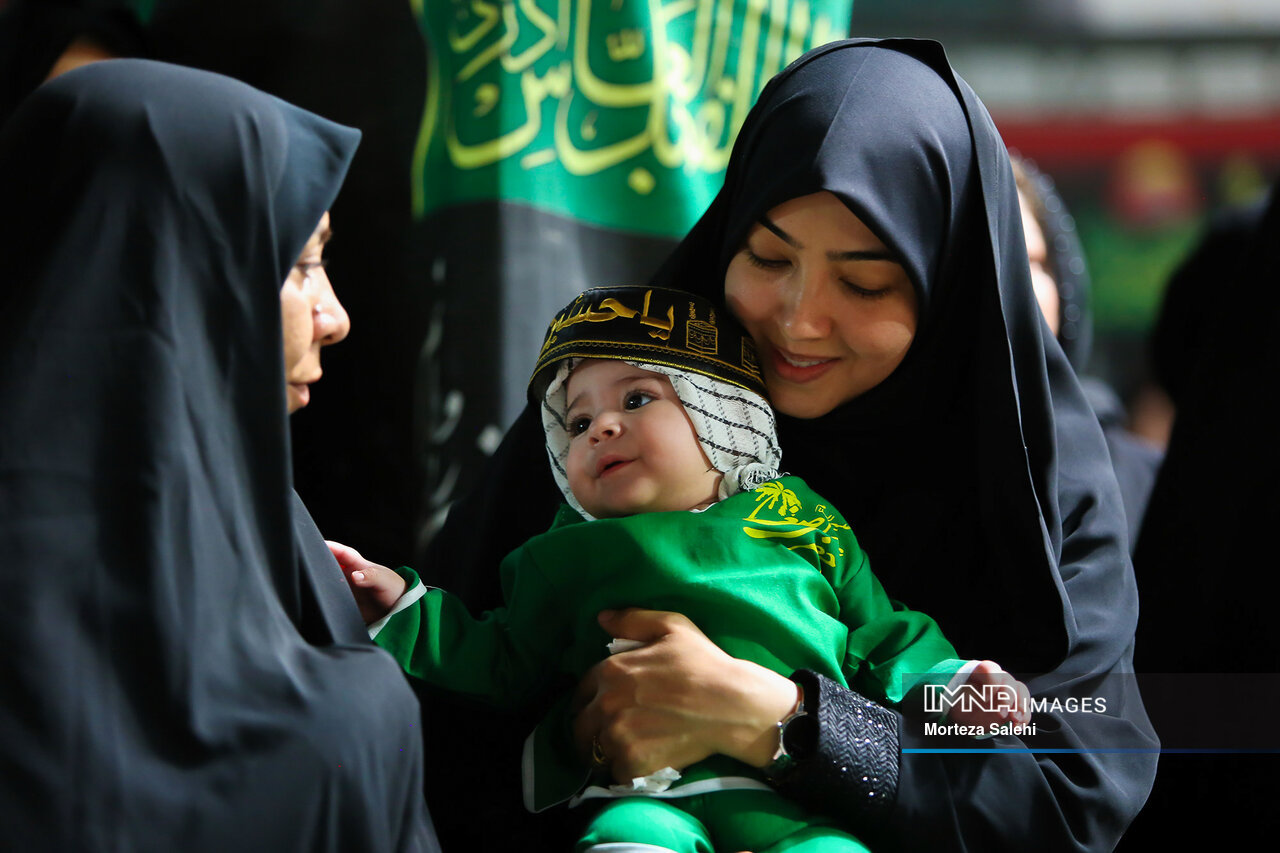
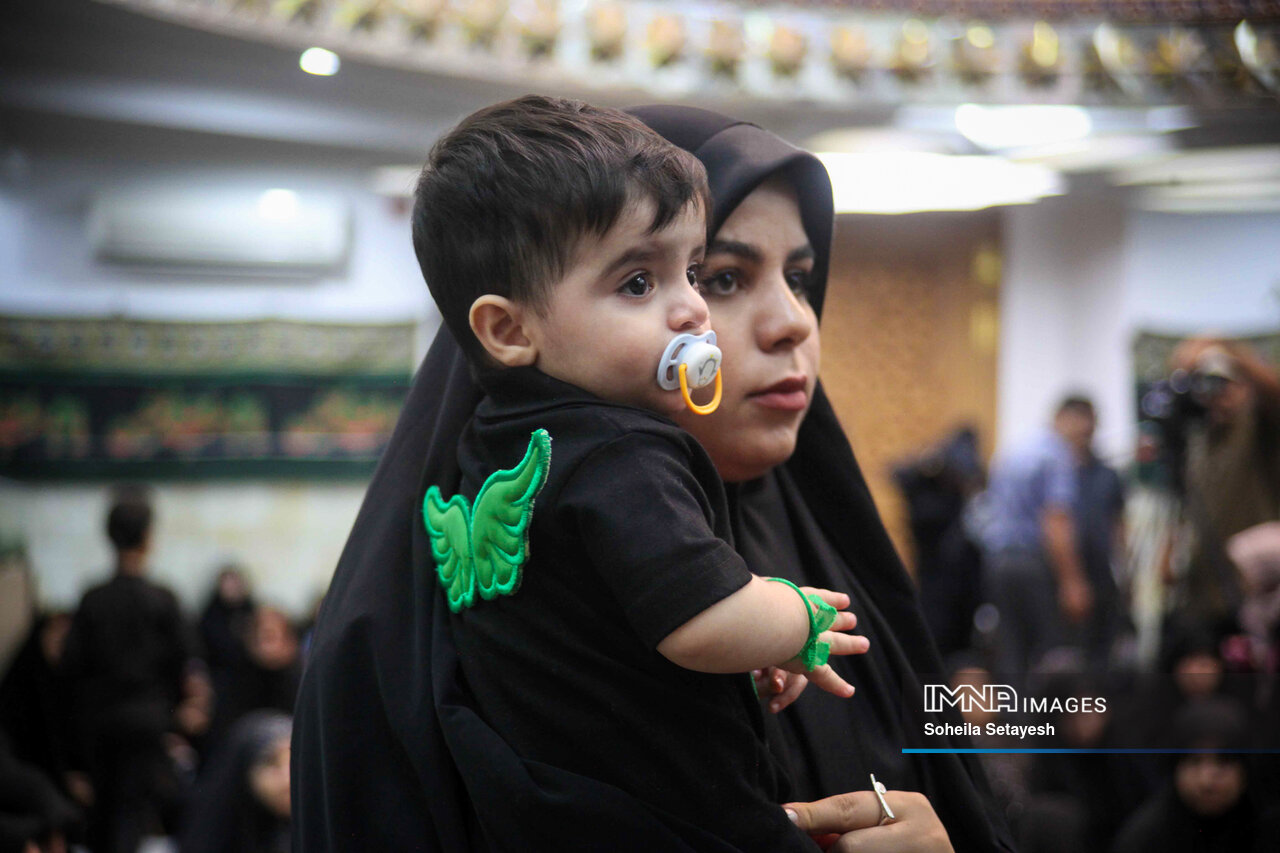
This conference is unique in its focus on mothers and their infants, who gather dressed in green and white garments symbolizing the attire of Ali Asghar. The infants often wear headbands inscribed with his name, creating a powerful visual connection to the martyr. The event is held simultaneously in thousands of locations across Iran and in over 45 countries, including Iraq, Pakistan, India, Bahrain, Turkey, Saudi Arabia, and Afghanistan, reflecting its global significance among Shia communities.
The ritual unfolds over approximately two hours and is structured into four main parts. It begins with a speech by a religious cleric, addressing themes of maternal love, religious devotion, and contemporary social concerns such as women's roles, chastity, and resistance to Western cultural influences. This is followed by the recitation of elegiac poems and lullabies that evoke deep emotional mourning for Ali Asghar. At the peak of the ceremony, mothers lift their infants above their heads, symbolically reenacting Husayn ibn Ali’s act of holding Ali Asghar aloft during the battle, while the sound of a crying baby is played to intensify the atmosphere of sorrow and remembrance.
A decorated cradle is passed among the attendees as a sacred object, allowing women to seek blessings and feel a spiritual connection to Ali Asghar, serving as a bridge between the community, the martyr, and God.
Beyond mourning, the conference carries profound religious, ideological, and political meanings. It is intended to promote the teachings of Ashura and to prepare the faithful for the awaited uprising led by the Mahdi, the twelfth Shia Imam believed to return as a savior. Mothers see the conference as a vital opportunity to instill Islamic values and the spirit of sacrifice in their children, nurturing them to embody the bravery and piety of Husayn’s family. This future-oriented perspective aligns with the belief in an ongoing cosmic struggle between good and evil, culminating in the Mahdi’s reappearance.
The Hosseini Infancy Conference thus serves as a powerful communal act of remembrance, education, and spiritual mobilization. It empowers women by recognizing their central role in preserving and transmitting religious identity and preparing the next generation for the continuation of Shia ideals. The large gatherings of mothers and infants in public spaces also draw societal attention, reinforcing the enduring significance of Karbala’s legacy in contemporary Shia life.
In essence, the Hosseini Infancy Conference is a living ritual that intertwines grief, hope, and resilience, honoring the innocent martyrdom of Ali Asghar while fostering a collective readiness for spiritual and social renewal within the Shia community worldwide.






Your Comment