

Iran (IMNA) - A city is never a combatant. It is not a soldier, nor is it a politician. The city is a living system of learning institutions, family memories, entrepreneurial ventures, culture, and community identity being shaped. Each bomb that drops takes away not only concrete, but also the social cohesion that has been built over years of hard work.
The loss of a city is not only about demolished buildings. It is also about abandoned schools, deserted markets, empty parks, and streets where laughter turns into fear. A city does not live through its standing skyline; it lives when its people have hope for the future.
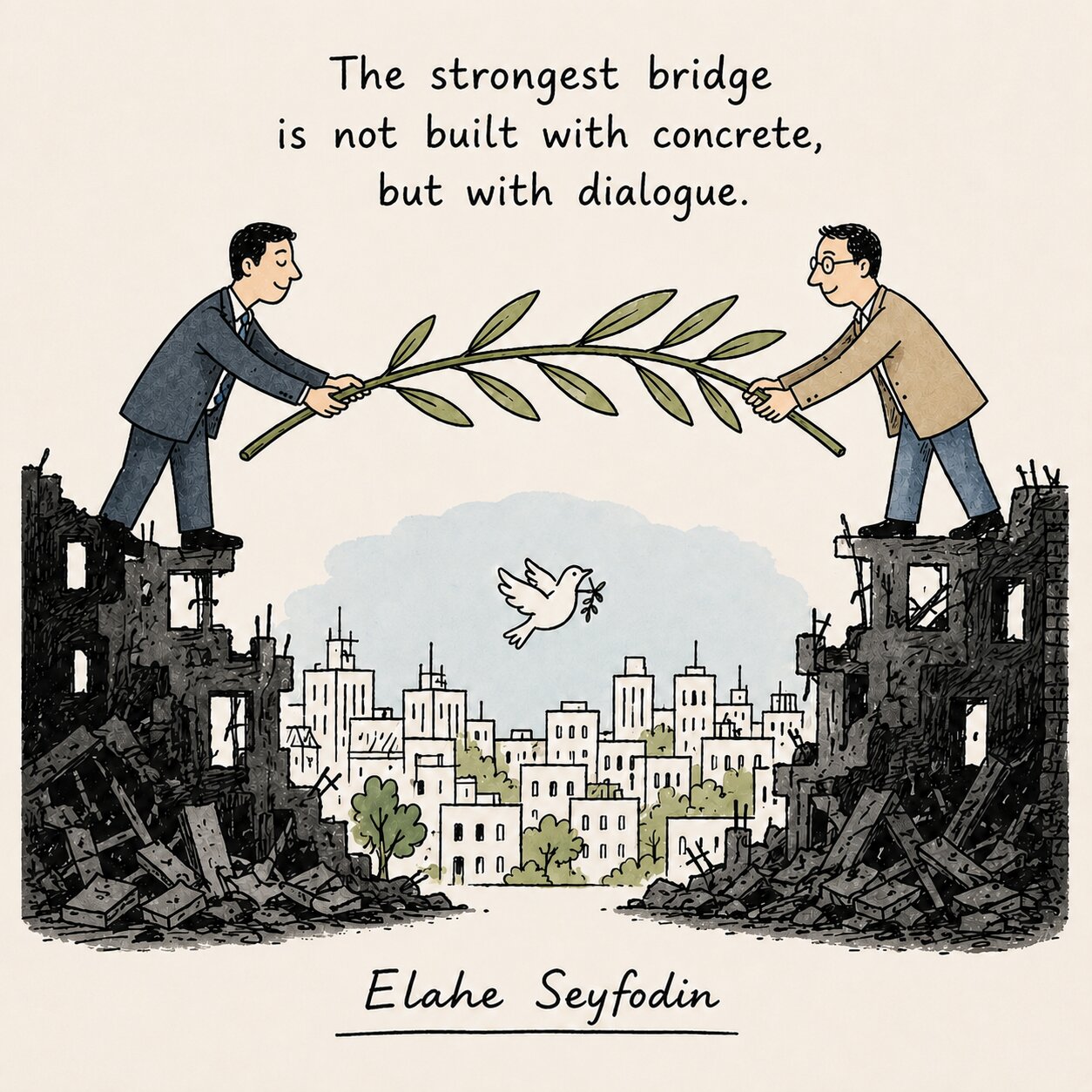
This is the reason why diplomacy should not be considered just a tool of foreign affairs, but rather one of the most potent tools for preserving cities.
Cities Need Diplomacy More Than Reconstruction
Reconstruction following any conflict is widely celebrated around the globe. Cranes, bridges, and modern buildings serve as symbols of the triumph over adversity and rebuilding efforts. Yet, reconstruction is always far more costly—financially, socially, and psychologically—than prevention of devastation beforehand. The true success of diplomatic endeavors lies not in their ability to reconstruct cities following conflict. The true success of diplomatic endeavors lies in their ability to avoid reconstruction entirely.
Therefore, diplomacy should not be seen anymore only as an instrument of foreign policy. It is one of the most effective tools for preserving the urban environment.
It seems that the world is always ready to celebrate the process of urban reconstruction following the war. The sight of cranes and construction sites of new bridges and skyscrapers represents the signs of resistance and revival.
All successful diplomatic negotiations do not only secure political interests but also ensure hospitals are not destroyed to become ruins, schools are not destroyed to become shelters, libraries are not set on fire to become ashes, and neighborhoods are not turned into battlegrounds. A peace agreement does not only protect monuments but also protects memories.
Cities of today have become interconnected systems that are dependent on stability. After conflict starts, all these systems break down at once, thus causing humanitarian crises that go beyond the boundaries of a nation-state. The impact includes the displacement of people, the economy being adversely affected, environmental damage, and instability within the region.

Cities Flourish Where Diplomacy Prevails
Undoubtedly, one of the most underrated impacts of any war is the erosion of trust between people. It is easy to reconstruct buildings using engineering know-how; repave roads, rebuild bridges, but rebuilding trust between neighbors, generations, and communities often takes decades.
In this way, diplomacy creates invisible infrastructure. It generates trust between nations, economic collaboration, ensures the protection of cultural exchanges, and creates the social cohesion that allows cities to flourish. Such factors never feature on satellite images, yet they determine if urban life can actually blossom.
Can you think of a kid being asked to draw his ideal city? He will surely not picture military checkpoints or fortifications but rather a city with schools, playgrounds, parks, bicycles, libraries, and families going out. It makes us remember the fact which is essential here – cities are built for people, not for wars.
The success of diplomatic efforts must not be solely determined by the number of treaties signed and negotiations made. The success of diplomacy is in these moments that are usually overlooked internationally speaking: kids' safe return to school, re-opening of markets in the morning, musical performances in public places, tourists exploring historical districts of the city, and families making plans for the future, not evacuations.
Cities at the Heart of Global Peace
City resilience does not start with post-disaster rebuilding plans. It starts with avoiding destruction. Each standing bridge that is a testimony of the fact that dialogue won over conflict is a manifestation of man’s intelligence. Each neighborhood that was not reduced to rubble is proof that talk could be better than fight.
Given that humanity is becoming more urban in nature, the protection of cities should become the diplomatic focus at the international stage. The fate of civilization would not only depend on the security of nations but also on the resilience of cities that most people occupy today.
War history tends to remember wars due to battles that were fought. However, future history might remember diplomacy due to cities that remained intact because there were no ruins.
The greatest accomplishment of diplomacy is not putting an end to the war after devastation but lies in the children asking why their city is no longer here. Because when diplomacy wins, cities keep on living.
The Real Battlefield Is the City
During the recent war against Iran, there has been the revelation of something that goes further than what is being read about in the news media. Modern wars do not involve territorial gain anymore or the need for military superiority; rather, it involves the continuity of the city's way of life. In essence, the main thing that is at stake is the systems that keep an entire society running: its transport system, its power system, public facilities, research institutions, its economic centers, etc.
This war showed how crucial diplomatic relations were even during times of war. In addition to its defense operations, Iran kept engaging diplomatically and internationally to avoid any further escalations of the situation and minimize the dangers to civilian life and urban centers. In spite of all military progress that made headlines, diplomatic relations and international communication were vital in making sure that cities did not get destroyed.
In the future, not only the absence of violent conflicts but also the ability of cities to continue functioning regardless of political tensions will be one of the benchmarks of peaceful coexistence. And from this standpoint, the major objective of diplomacy is not only avoiding wars but also securing the continuation of the rhythm of urban civilization without which no country could survive in the future.

Your Comment