

Iran (IMNA) - International urban relationships provide cities with opportunities to develop and enhance their tourism sectors through collaboration. Globalization continues to create a rapid shift in the way that cities are viewed and located within international systems, and as such, cities are no longer restrictively linked to their responsibilities of local governance—they are becoming key players in the global cooperative network since they now connect with other cities across national boundaries to work towards overcoming the common challenges of their respective regions and exploring potential opportunities by establishing partnerships (e.g. through sister cities, friendship cities, cooperation agreements, and so on).
In addition to many other benefits, the growing significance of international city partnerships for urban tourism development is becoming evident. In this regard, the establishment of international city partnerships is viewed, from the perspective of urban management, as a critical tool for increasing destination competitiveness; fostering cultural exchange; creating economic development opportunities; and promoting sustainable tourism development.
Municipal Cooperation Emerges as Key Driver of Tourism Development
One purpose of cities forming partnerships is to enhance tourism in the cities through collaborative efforts. By working together, cities can develop their communities and make them more appealing to tourism; cities benefit through enhanced growth and competitiveness, and tourists can experience other cultures and lifestyles through City-to-City Partnerships.
Municipalities are joining forces to develop sustainable tourism practices that enhance cities' attractiveness for both local and international tourists, while protecting the environment. International City Partnerships (ICPs) are critical to the overall success of the city as well as the overall success of tourism.
Municipalities view their ICPs as a means of improving the quality of life in their communities and facilitating city growth and development in ways that are harmonious with the surrounding communities. The establishment and strengthening of ICPs is an essential ingredient for creating a more competitive urban economy in the context of global tourism.
Furthermore, the successful establishment of ICPs is evidence of the timely and constructive work municipalities are doing regarding the development of competitive tourism districts and improving the overall tourism experience for both local and international tourists.

Building International Connections to Attract International Visitors
In this highly competitive environment, cities need to be able to develop and sustain international relationships with other municipalities, which has become an extremely valuable asset for municipalities.
Building strong international relationships allows municipalities to increase their overall global footprint, improve their community image, and access new tourism markets. As a result of these partnerships, municipalities can enhance their position within the broader context of international networks and, as a result, improve their visibility with potential visitors, who otherwise may not be familiar with the destination they are considering visiting.
International city partnerships contribute to tourism development primarily in destination branding and global promotion. The perception of a city is central to travel decision-making. A city is selected as a destination based on the way consumers perceive it as a result of the media, experience, or familiarity with the culture, and the reputation of the country of origin as a travel destination. City-to-city partnerships provide a variety of additional channels through which cities can promote themselves to other countries. For example, joint marketing efforts, tourism trade shows and expositions, cultural festivals and exchanges, and other activities provide cities with new opportunities to market themselves to new customers. When a lesser-known city partners with a globally recognized partner city, it can gain visibility and credibility and ultimately attract more international customers.
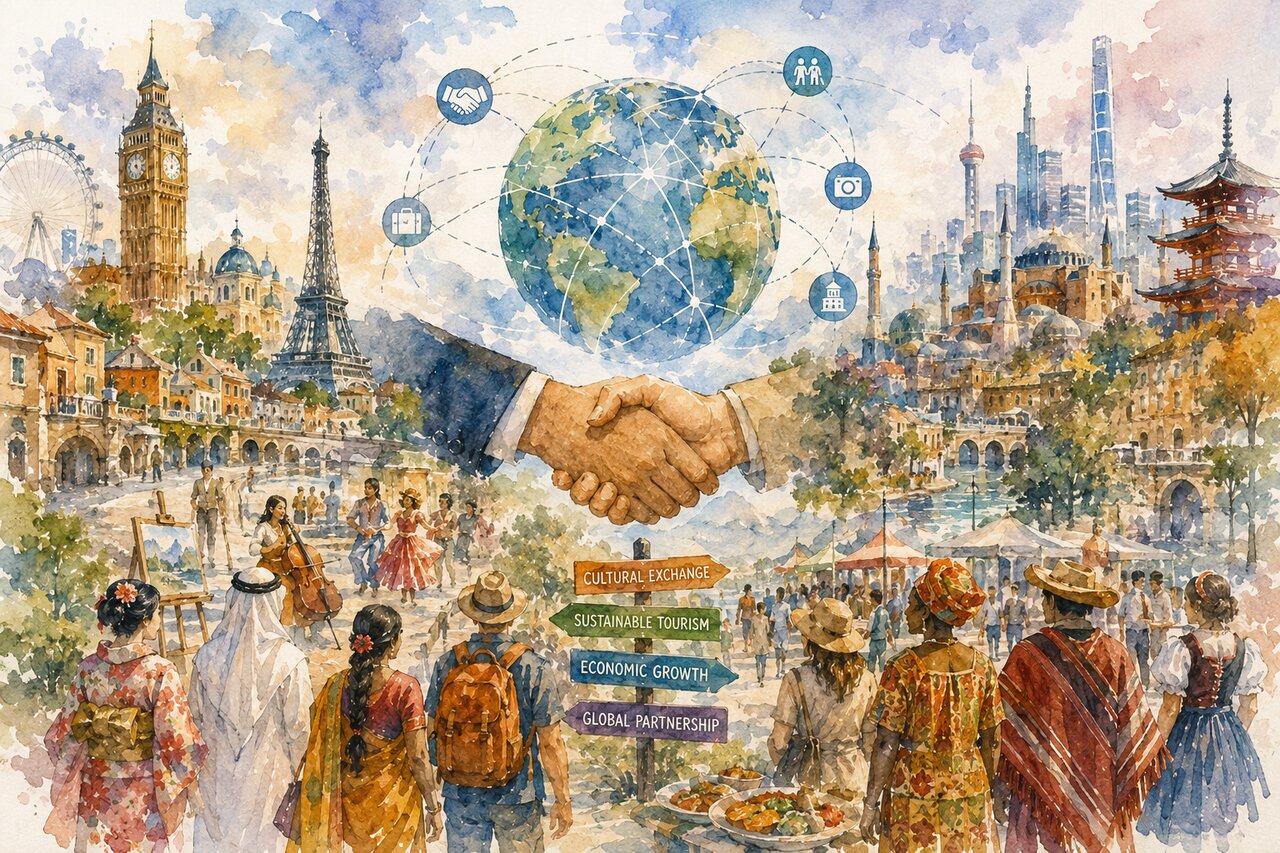
When Culture Travels, Tourism Follows
Tourism is more than just the physical movement of individuals and groups from one location to another; it is an exchange of cultural practices, experiences, and ideas. In the realm of cultural exchange, initiatives that promote city-to-city partnerships also support numerous cultural initiatives, including art exhibitions, music festivals, heritage celebrations, educational exchanges, and culinary festivals. Those who participate in these initiatives are exposed to the various cultural traditions of other cities, which creates a mutual understanding among populations of different cities. Therefore, when an individual becomes aware of the culture of a city that is partnered with a twin city through an exchange experience, that individual usually becomes motivated to visit that city.
By enhancing cultural diplomacy between cities, emotional and intellectual connections can form, serving as a powerful catalyst for tourism between populations. The establishment and development of international city-to-city relationships have also greatly contributed to the diversification of the tourism market. Many destinations rely on a very limited number of source markets for revenue and, as a result, are susceptible to economic downturns, political unrest, public health emergencies, or changes in travel patterns.
In an age of growing global connections, cities can no longer depend only on their physical attractions or historical sites to compete in tourism. Success now relies on building meaningful relationships, joining international networks, and using chances for cooperation. International ties between cities create a way for destinations to boost their visibility, diversify tourism markets, improve management practices, promote sustainability, and enhance economic development. For urban management, these partnerships mean much more than simple gestures of friendship. They are tools that help directly with the growth, strength, and competitiveness of urban tourism. As cities take on a more significant role in global matters, international municipal cooperation will remain vital for shaping the future of tourism development around the world.

Your Comment