

Iran (IMNA) - The growing interrelation of challenges currently faced by today's world has led to a significant transformation of international relations. The problem areas of climate change, emergencies related to public health, environmental damage, migration, and infrastructure development are not confined to any particular state boundaries anymore and cannot be solved solely using traditional diplomatic processes involving national governments as key actors. Although states retain the main role in forming their foreign policy and protecting their sovereignty, the need to find new ways to address many current challenges, which often require local action, has become apparent. In such a situation, cities emerge as important stakeholders in global governance, relying on the instrument of urban diplomacy.
As such, the rise of urban diplomacy is based on the recognition that there is a chance for cities to play a pivotal role in dealing with the impacts of global transformation. Cities have duties pertaining to the development of infrastructure, transportation, environmental concerns, the healthcare system, and disaster management. In essence, there comes a time when the city finds itself at the forefront of global issues even before the country formulates its policies. As such, it can be inferred that giving cities some degree of autonomy to establish partnerships is an expansion of sovereignty.

How Cities Exchange Knowledge and Solve Problems?
One of the significant benefits of a sister-city partnership is the ability of this system to generate relevant reactions to problems that have arisen across borders and have an impact on community life at the local level. The process of conducting diplomacy is inherently linked to strategic considerations and lengthy negotiations. This is vital and necessary for handling international affairs, but it might not be enough in solving the issues that arise locally and need an immediate solution. These may include such things as air pollution, water management, natural disaster preparation, health issues, etc.
The concept of sister city relationships is an institutional framework that facilitates communication between cities, knowledge exchange, and the adoption of practical policies without requiring prolonged diplomatic negotiations. In situations where natural catastrophes occur, epidemics arise, or environmental problems become evident, sister cities provide the necessary channel through which technical knowledge, emergency response mechanisms, and necessary resources can be conveyed rapidly. Cooperation in this manner builds greater resilience among cities and leads to better crisis management on the local and international levels. Urban diplomacy is thus an important supplement to state diplomacy when dealing with technical and local problems.
The Diplomatic Value of City-to-City Connections
The role of sister-city relationships in maintaining international cooperation during conflicts between nations is also important. Inter-state relations may be determined by long standing short term rivalries, subterranean tensions over interests and the ill-defined nature of geopolitics. These circumstances can lead to a frozen diplomacy and will be extremely limiting for any constructive engagement. But cities have a unique place in the international system as such. Not encumbered by military obligations or territorial aspirations, they typically exist in a less-politicized element of operation centered on the needs of citizens rather than the strategic calculations of national governments.
In this capacity, local bodies have the capability to engage in what could be called technical-cultural diplomacy. This is because through sister city partnerships, municipal bodies have the opportunity to cooperate in areas like city planning, transport infrastructure, digital governance, smart cities, library systems, cultural exchange, tourism industry growth, work training, and job creation. Since all these sectors are technical and social in nature, they tend to exist outside the domain of ideological and political conflicts that mark international affairs. Therefore, dialogue remains unimpaired even when the diplomatic relations between nations have deteriorated.
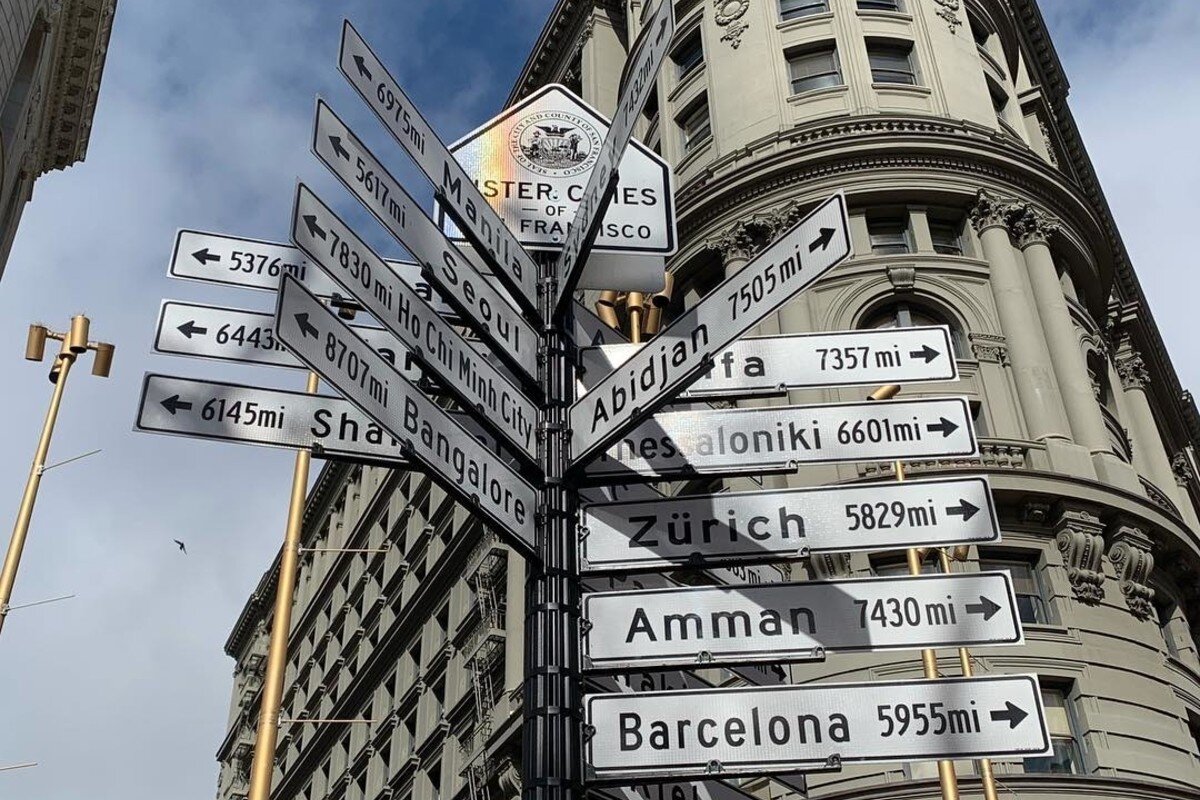
Sister city partnerships foster trust between societies, which also can be seen as long-term practical benefits. Ongoing interaction between representatives of municipal administrations and local schools; between business, cultural and civil society groups develop lasting networks of collaboration that foster mutual understanding – weakening perceptions of distance or enmity. Such personal-to-personal interactions create a culture of dialogue and collaboration that can help underpin national diplomatic goals.
Sister city partnerships foster trust between societies, which also can be seen as long-term practical benefits. Ongoing interaction between representatives of municipal administrations and local schools; between business, cultural, and civil society groups develop lasting networks of collaboration that foster mutual understanding – weakening perceptions of distance or enmity. Such personal-to-personal interactions create a culture of dialogue and collaboration that can help underpin national diplomatic goals.
نویسنده: الهه سیف الدین

Your Comment