
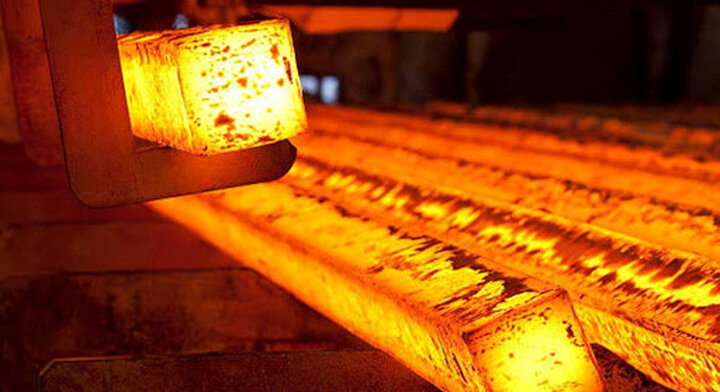
Iran (IMNA) - On Monday, officials announced that researchers in Isfahan had successfully developed a process to convert industrial wastewater from the steel sector into a profitable and environmentally friendly product.
At the Mobarakeh Steel Complex — one of Iran’s largest industrial facilities — around 15,000 tonnes of wastewater are generated annually. Because the waste contains iron and other metals, it has long been viewed as a potential resource if treated safely. Developing a method to recover valuable materials without creating new pollutants has been a key goal for Iranian industrial engineers and environmental scientists.
A knowledge-based company in Isfahan spent two years designing a process that uses ultraviolet light to break down fatty chains in the wastewater through a combination of mechanical, chemical, and physical techniques. The result is a process that converts the liquid waste into a usable raw material for steel production — ensuring that nothing is wasted.
The innovation not only reduces environmental hazards but also produces a valuable byproduct for reuse in industry. According to researchers, the technology could open opportunities for Iran to export its expertise to other countries facing similar challenges.
The new method is described as efficient, low-cost, and easily adaptable to existing industrial systems, making it attractive to large steel producers. The project has already drawn attention from industrial managers and government officials who see it as a prime example of how science and production can work hand in hand.
The global steel industry consumes vast quantities of water and produces large volumes of polluted waste. Traditional treatment systems are costly and often leave behind toxic sludge. The Isfahan breakthrough offers an alternative — turning an environmental liability into an economic advantage.
Beyond industrial benefits, the project aligns with Iran’s broader efforts to address water shortages. Much of the country lies in arid or semi-arid zones, with major cities like Tehran facing prolonged droughts. Last week, President Masoud Pezeshkian warned that if rain does not arrive by December, Tehran could face water rationing — or even evacuation in extreme scenarios.
In response, the government has prioritized wastewater recycling. Tehran now operates eleven treatment plants producing more than 390 million cubic meters of treated water annually, with expansion projects expected to boost capacity by over 10 percent. Nationwide, Iran produces about 1.8 billion cubic meters of wastewater each year, and more than 280 active treatment plants are already in operation across the country.
Officials note that if all wastewater were properly treated and reused, it could significantly reduce demand on freshwater reserves, supporting agriculture and industry alike. National regulations now require most industries within reach of wastewater networks to use treated water in production, exempting only food and hygiene sectors.
This policy supports the Clean Air Act and Iran’s Seventh Development Plan, both of which promote sustainable water use and pollution reduction. Experts estimate that such measures have already saved millions of cubic meters of freshwater annually and reduced costs for industries that once relied on groundwater extraction.
The Isfahan project highlights Iran’s capacity for domestic innovation even under economic constraints. By transforming steel wastewater into a reusable resource, Iranian engineers are not only cutting costs and protecting the environment but also proving that localized research can yield globally relevant solutions.
Through closer cooperation between universities, research centers, and major industries, Iran is building a foundation for practical, science-driven progress — turning environmental challenges into industrial opportunities.
Your Comment