
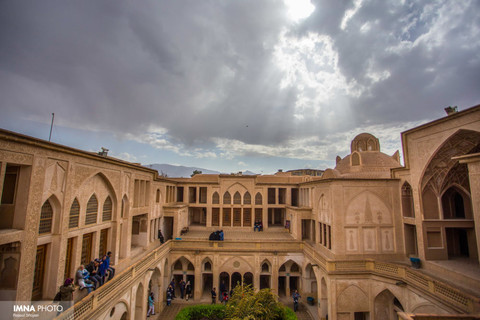
Iran (IMNA) – With this recognition, Kashan joins the UNESCO Creative Cities Network (UCCN) alongside renowned cities such as Rome, Paris, and Barcelona, placing it among global leaders in architectural innovation and heritage preservation.
Located in central Iran, Kashan is home to over 1,700 historic sites, including 330 nationally registered monuments and the UNESCO-listed Fin Garden, a masterpiece of Persian landscape architecture. The city’s inclusion in the network marks a milestone in Iran’s cultural diplomacy, highlighting its growing influence in international architectural and urban sustainability dialogues.
A living museum of Iranian-Islamic architecture
Kashan’s history stretches back more than 8,000 years, with archaeological findings at Sialk Hill revealing some of the earliest traces of human civilization in the Iranian plateau. Over the centuries, the city developed into a vibrant center of trade, scholarship, and craftsmanship, particularly flourishing during the Safavid era.
Its distinctive architecture reflects deep environmental intelligence: wind catchers, domed roofs, and Qanat water systems were ingeniously designed to moderate the desert climate long before modern engineering.
The Fin Garden, designed during the Safavid period, remains a symbol of Persian harmony between architecture, nature, and science—with its flowing water channels, cypress-lined paths, and symmetrical pools offering an oasis of balance in the desert.
Kashan’s traditional houses—such as the Tabatabai House and the Borujerdi House—stand as hallmarks of Persian residential architecture, showcasing intricate plasterwork, mirror mosaics, and stained glass illuminated by desert light. These homes, built for wealthy merchant families, combine aesthetic elegance with climatic efficiency.
Meanwhile, Kashan’s historic bazaars continue to pulse with creativity, sustaining traditional crafts like carpet weaving, pottery, and metalwork, linking the city’s past artistry to its present-day cultural economy.
A global platform for creative heritage
The UNESCO Creative Cities Network, which connects more than 300 cities worldwide across disciplines including literature, music, gastronomy, and architecture, provides Kashan with new opportunities for international collaboration and cultural exchange.
Geographically situated between the Karkas Mountains and the Kavir Desert, Kashan’s landscape has long inspired sustainable design solutions adapted to arid conditions. The city’s architecture—shaped by its climate and geography—now serves as a blueprint for sustainable creativity, studied by urban planners as a model of environmental adaptation and design continuity.
With UNESCO’s recognition, Kashan is poised to strengthen its role as a global example of how tradition and innovation can coexist, offering valuable lessons for the future of sustainable city development.
Your Comment