
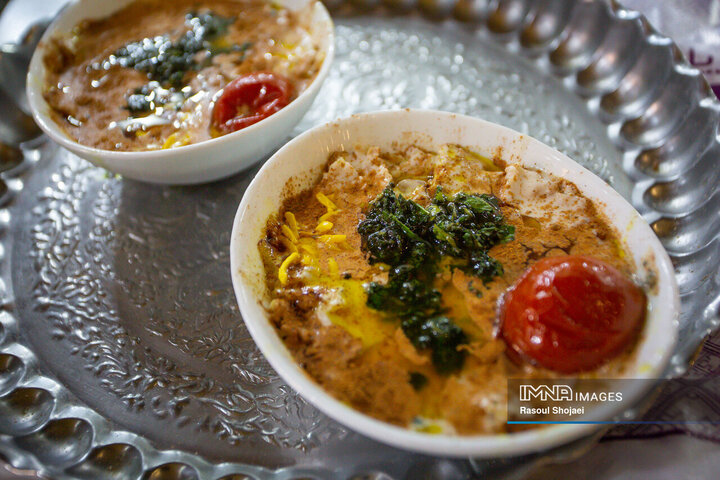
Iran (IMNA) - Visitors deeply connect with Iran’s living food heritage by participating in cooking workshops, market tours, and tasting heritage dishes that embody the region’s soul.
Iconic dishes such as Beryani and Khoresht Mast reveal Isfahan’s artistry, history, and medicinal knowledge with every flavorful bite. Located in central Iran, Isfahan province’s Beryani tells a story spanning many centuries. Its golden meat, fragrant saffron and cinnamon aroma, and crisp sangak bread served with fresh Sabzi-Khordan—a basket of radishes, scallions, and aromatic herbs—offer a sensory dining experience that transcends mere nourishment.
The cuisine captures Isfahan’s glorious history, cultural richness, and the locals’ enduring passion for culinary craftsmanship. Iranian cuisine overall mirrors the country’s deep cultural heritage, expressing traditions, geography, and identity. Among Iran’s culinary treasures, Isfahan stands out for a food tradition that has attracted visitors for centuries.
Isfahan’s fragrant herbs, hand-ground spices, and age-old recipes invite travelers to explore a city as intricate in its food as its UNESCO-listed architecture. Food here serves as a gateway to the city’s rich culture, shaped by its desert geography and historic trade routes that introduced exotic spices and herbs.
Hearty stews and meat dishes, commonly served with fresh bread, dominate Isfahan’s culinary landscape and represent the city’s identity. These dishes offer travelers immersive engagement with local life. Culinary tourism is evolving here to include workshops and cooking demonstrations where tourists witness traditional techniques and sample recipes that have been perfected for generations.
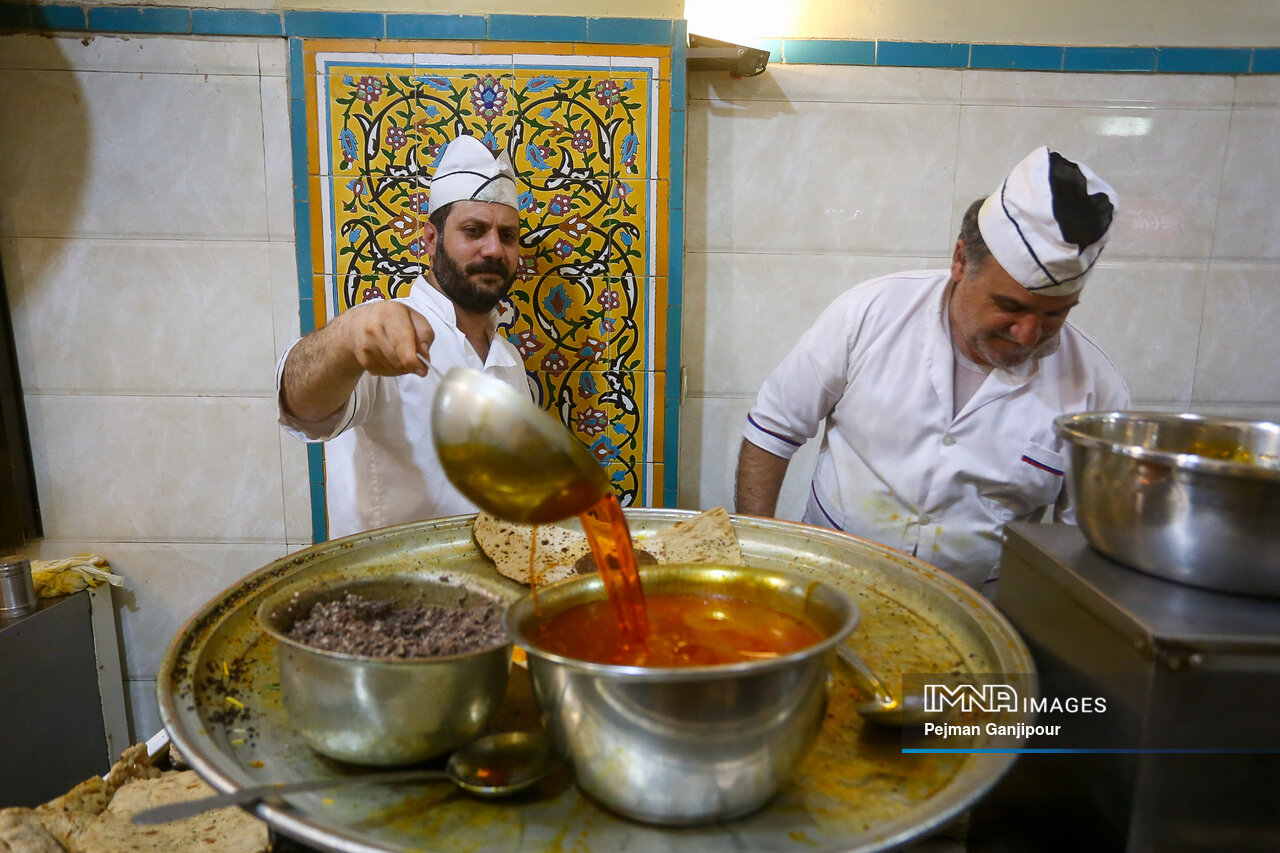
Isfahan’s bazaars pulse with life and offer a feast for the senses. Alleyways brim with colorful spice towers, the aroma of fresh bread wafts from brick ovens, and vendors offer samples of delicacies like Beryani and Kuku Qandi. The Julfa market, in the historic Armenian quarter, is renowned for its saffron, dried fruits, nuts, and herbs, providing visitors direct access to Isfahan’s culinary heritage.
Traditional eateries off main streets serve time-honored dishes such as Kaleh Joosh and Yakhmeh Torsh, some now rarely prepared in Iranian homes, offering an authentic experience of daily Isfahan life and its food traditions. Beryani, the city’s signature dish, blends ground lamb, saffron, mint, onion, and cinnamon, garnished with nuts and served with sangak bread and fresh herbs. Often accompanied by Aab-Goosht, a lamb stew, Beryani’s bold flavor and vivid presentation are centuries old and a must for visitors.
Khoresht Mast, a cold yogurt stew dessert with lamb, saffron, and sugar, balances sweet and tangy notes, contrasting traditional Iranian sweets. Yakhmeh Torsh mixes rice, lamb, apricots, quince, and sugar or date syrup into a sweet-sour stew traditionally believed to aid anemia and bone health—symbolizing deep culinary and medicinal wisdom.
Kuku Qandi, a fragrant dessert made with potatoes, eggs, rosewater, and saffron, offers a delicate aroma and nostalgic flavor. Kachi Haft Dokhtaroon, a legendary soufflé-like dessert made from wheat flour, pistachios, almonds, and rosewater, has cultural roots in an ancient ritual where seven girls prepared it on Tuesdays.
Kaleh Joosh, a simple yet nourishing eggplant soup with whey, dry mint, walnuts, and onions, stems from Iran’s nomadic tribes and highlights the rustic soul of Isfahani cuisine. Serving this dish with crusty bread brings a taste of nomadic life to table.

Isfahan’s culinary tourism offers interactive opportunities for visitors to attend workshops where they learn spice blending, dough kneading, and long-simmered cooking techniques. These sessions translate the city's culture, history, and everyday life into engaging lessons. Visitors may spend hours in sweet-making workshops crafting Kuku Qandi or Kachi Haft Dokhtaroon under local guidance, immersed in centuries-old culinary rituals.
Both domestic and international travelers enjoy these food experiences—with younger Iranians seeking unique activities and older foreign tourists drawn to cultural immersion and authentic tastes. Studies suggest women emphasize food safety and natural ingredients, while men prioritize flavor and novelty, shaping Isfahan’s creative culinary tourism offerings.
Cooking workshops, market tours, and hands-on classes cater to diverse tastes, allowing meaningful engagement with the city’s culinary culture. Food festivals and gastronomic events, whether held in rustic villages or urban centers, celebrate local saffron, pastry arts, and traditional recipes. Visitors witness Iranian chefs’ craft, learn age-old techniques, and try preparing rare dishes firsthand.
Isfahan’s cuisine is a living expression of culture, tradition, and history. Its creative culinary tourism ensures visitors do more than eat—they experience the rituals, flavors, and artistry defining the city. In markets, kitchens, and workshops, food becomes a language linking tourists to locals and centuries of tradition. Exploring Isfahan through its cuisine offers a vivid window into the city’s heart, where every dish tells a story.
To truly understand Iran, immersing in Isfahan’s rich culinary heritage is an intimate and unforgettable journey.
Your Comment