
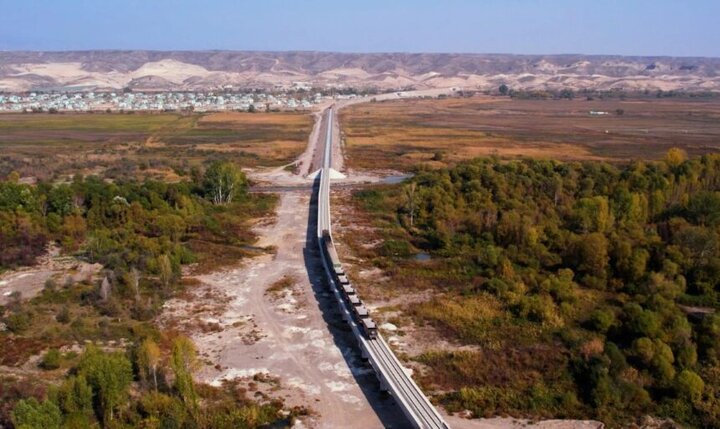
Iran (IMNA) - On August 8, 2025, US President Donald Trump hosted Armenian Prime Minister Nikol Pashinyan and Azerbaijani President Ilham Aliyev at the White House, where the leaders signed a peace agreement. Central to this deal is a transit corridor connecting Azerbaijan to its exclave Nakhchivan, with exclusive US rights to develop and manage the corridor for 99 years. The corridor was renamed the "Trump Route for International Peace and Prosperity" (TRIPP). Though under Armenian legal jurisdiction, the US will lease it to a private American consortium for construction and oversight.
Iran's Foreign Ministry welcomed the cessation of hostilities but strongly cautioned against foreign interference, highlighting its concerns about security and regional stability. Senior Iranian officials, including Ali Akbar Velayati, advisor to Supreme Leader Ayatollah Khamenei, issued stern warnings against the corridor's establishment. Velayati declared Iran's intent to block any American corridor in the Caucasus, regardless of Moscow’s stance, labeling the corridor a "graveyard for Donald Trump’s mercenaries".
The corridor’s location near Iran’s borders is particularly provocative, coming weeks after US attacks on Iranian nuclear sites followed by Iranian retaliation. The corridor’s development signals a possible Western security presence directly adjacent to the Iran-Armenia border, escalating tensions further.
From Washington’s perspective, securing the Zangezur Corridor serves multiple strategic purposes: diminishing Russia’s post-Soviet influence, provoking Iran, and undermining China’s Belt and Road Initiative by disrupting the critical Middle Corridor trade route, which links China to Europe through the South Caucasus. Control over this route would enable the US to monitor and potentially disrupt commercial flows, challenging China's ascent as a global power.
Iran views these developments as a multi-faceted threat: losing its traditional land bridge role in East-West trade, facing potential surveillance or military installations near its borders, and jeopardizing its balanced relations with Armenia. Iran’s response strategy includes diplomatic outreach to both Armenia and Azerbaijan, maintaining regional balance, while preparing for a post-Russian influence order in the Caucasus.
Armenia may gain short-term security and economic support from the US but risks deepening dependence on Western powers and losing strategic balance. Russia, occupied with conflicts in Ukraine and the Middle East, has yet to respond strongly but is unlikely to relinquish its influence in the South Caucasus without consequence.
This geopolitical realignment around the Zangezur Corridor illustrates the complex interplay of local conflicts and global competition, with the South Caucasus emerging as a critical arena for the ambitions of the United States, Russia, Iran, and China simultaneously.
Your Comment