
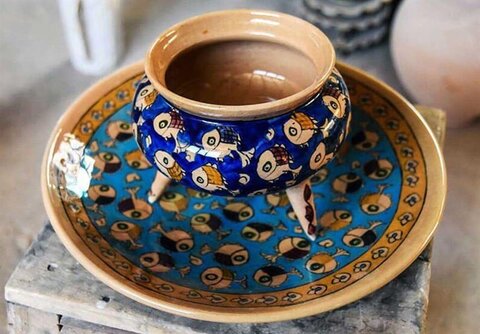
Iran (IMNA) - Pottery is one of humanity’s oldest crafts, transforming a readily available natural material into objects that serve everyday needs while expressing artistic creativity. In Iran, this tradition has developed over thousands of years, leaving a remarkable record of changing societies, technological advances and cultural interactions. From early earthenware vessels to intricately decorated ceramics of the Islamic period, Iranian pottery reveals how craftsmanship can preserve historical knowledge while adapting to new artistic influences.
The process begins with clay, which is shaped by hand or on a potter’s wheel, dried and fired in a kiln. Depending on the local materials and the intended appearance, artisans may leave the surface unglazed or apply pigments, decorative coatings and glazes. Differences in clay composition, firing conditions and ornamentation have contributed to the distinctive character of pottery produced across Iran.
A prehistoric craft with a long history
Archaeological discoveries demonstrate that pottery production in the Iranian Plateau dates back to prehistoric times, although its precise beginnings vary by region and cannot be attributed to a single place. Early communities developed techniques for making functional vessels, gradually incorporating painted patterns and more elaborate forms. These objects provide evidence of technological knowledge as well as the everyday practices and aesthetic preferences of ancient societies.
Pottery subsequently developed alongside the major civilizations that occupied the Iranian Plateau. During the Achaemenid period, from approximately 550 to 330 BC, vessels formed part of a broader artistic tradition that included metalwork, sculpture and luxury objects. Animal-shaped drinking vessels, including rhytons, also belonged to the wider repertoire of ancient Iranian craftsmanship, although their production and use varied across periods and regions.
Under the Parthians, from 247 BC to AD 224, pottery continued to reflect regional diversity and connections across the extensive territories of the ancient Iranian world. Archaeological evidence from sites in western Iran, including Kangavar, helps illustrate the range of vessels and surface treatments used in different historical settings.
During the Sassanid period, from AD 224 to 651, pottery makers produced bowls, jars, jugs and other household objects. Decorative approaches included geometric and vegetal patterns, while animal imagery and raised ornamentation formed part of the broader visual language of the era. These artistic traditions developed alongside other crafts and contributed to the cultural heritage inherited by later generations.
Islamic-era ceramics and artistic innovation
The arrival of Islam brought new cultural and artistic influences to Iranian pottery, building on existing skills while encouraging experimentation with forms, inscriptions and surface decoration. Over subsequent centuries, ceramics became an important medium through which artisans combined local traditions with ideas circulating across the Islamic world.
The Seljuk period, particularly the 11th through 13th centuries, was a major phase in the development of Iranian ceramics. Workshops refined techniques that included incised decoration, molded relief, pierced surfaces, underglaze painting, overglaze enameling and metallic-luster finishes. These methods enabled artisans to create vessels with complex compositions, vivid colors and elaborate ornamental details.
Collections held by international museums provide tangible evidence of this achievement. Ceramics associated with medieval Iran include turquoise-glazed vessels decorated with intricate relief patterns, inscriptions and fantastical creatures. Other pieces demonstrate the sophistication of mina’i ware, a technique involving multicolored overglaze painting and, in some examples, gilding. Such objects reveal how ceramic artists combined technical precision with storytelling, calligraphy and decorative design.
The city of Kashan became particularly important in the production of sophisticated medieval ceramics, while Nishapur developed a distinctive ceramic tradition during the early Islamic centuries. Together with other production centers, these cities demonstrate that Iranian pottery was never a single, uniform style but a diverse field shaped by local expertise, commercial networks and artistic exchange.
Ceramic production continued to evolve during the Safavid period, from 1501 to 1736. Relations with China influenced Iranian tastes and workshop practices, particularly in the production of blue-and-white ceramics and efforts to develop porcelain. The interaction between imported objects and domestic craftsmanship illustrates a recurring feature of Iranian pottery: artistic traditions have frequently advanced through the adaptation of ideas from beyond the country’s borders.
Regional traditions that remain alive
Although historical collections preserve the achievements of earlier centuries, Iranian pottery is not confined to museums or archaeological sites. Across the country, craftspeople continue to produce ceramics for domestic use, decoration and contemporary markets, drawing on regional materials and knowledge passed between generations.
One of the most distinctive examples can be found in Kalporgan, a village in Sistan and Baluchestan province near Iran’s southeastern border. Its pottery is particularly notable for hand-building techniques, unglazed earthenware and geometric decoration. The craft is closely associated with the skills of local Baloch women, whose work helps sustain a tradition widely recognized for its continuity with ancient regional practices.
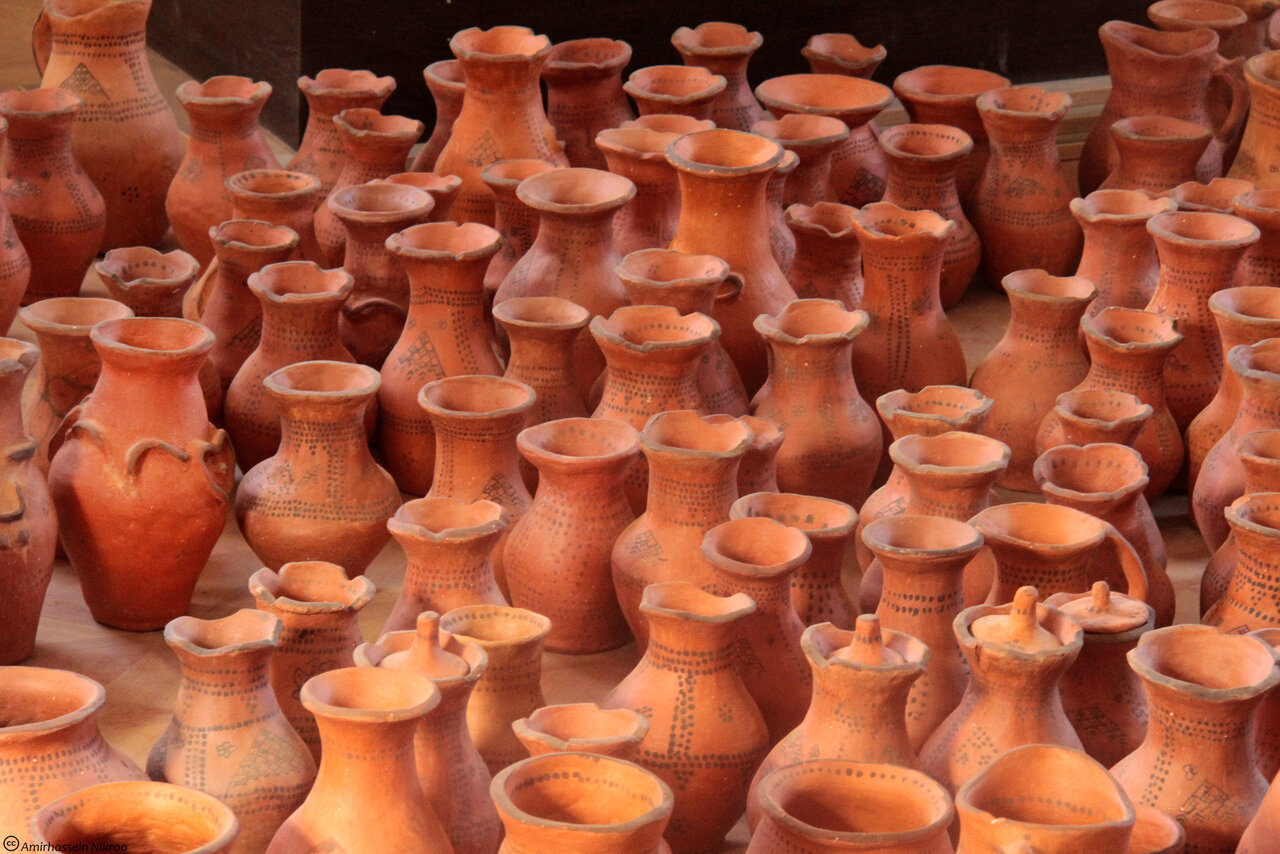
Kalporgan pottery is distinguished by its relationship with the surrounding landscape. Local clay is shaped into vessels, dried and decorated with mineral-based pigments before being fired. The resulting pieces often display reddish surfaces and dark geometric patterns. Unlike mass-produced ceramics, their appearance is closely connected to the materials available locally and the techniques used by individual artisans.
The tradition is especially significant because it demonstrates how cultural heritage can remain part of everyday life rather than surviving solely through the preservation of historic objects. The knowledge required to prepare clay, shape vessels and apply traditional motifs is maintained through practice, observation and intergenerational learning.
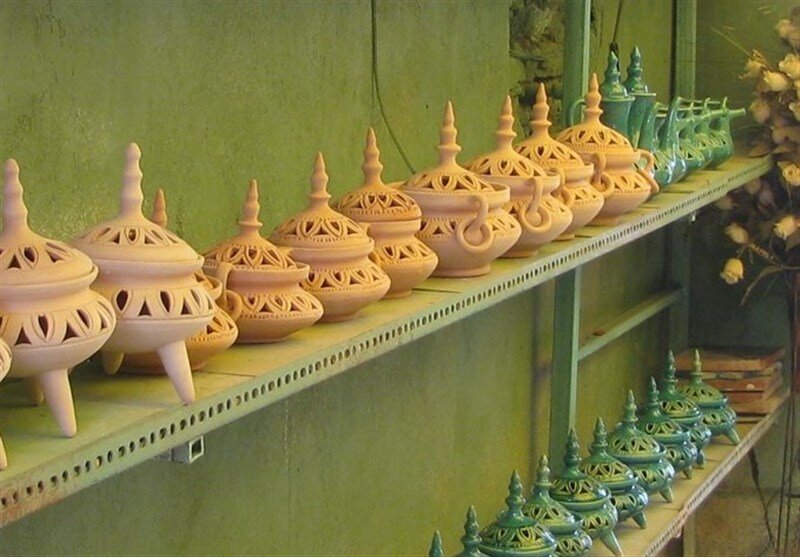
Another important center is Lalejin, in Hamadan province, widely known for its pottery and ceramic production. Here, workshops produce a broad range of objects, from household vessels to colorful decorative pieces. The town’s ceramic identity has helped sustain local craftsmanship and connect traditional production with contemporary markets.
Shahreza in Isfahan province and pottery-making communities in Gilan also contribute to Iran’s regional diversity. Their products reflect differences in local clay, firing methods, decorative preferences and practical uses. These regional distinctions are central to understanding Iranian pottery as a living tradition rather than a single national style.
Preserving heritage while adapting to the present
Like many traditional crafts, pottery faces the challenges of changing consumer preferences, industrial production and the economic pressures affecting small workshops. Modern equipment and new materials can expand production possibilities, but the survival of distinctive techniques also depends on opportunities for artisans to earn a livelihood, train younger generations and reach new audiences.
Cultural tourism, craft markets, museum collections and educational initiatives can help introduce regional pottery traditions to wider audiences. They can also strengthen the relationship between heritage and local development, particularly in communities where craftsmanship remains an important source of identity and income.
For researchers, Iranian pottery offers a valuable connection between archaeological evidence and contemporary cultural practices. A vessel excavated from an ancient settlement and one shaped in a traditional workshop today may differ in appearance and function, yet both reflect the relationship between people, natural materials, technical knowledge and artistic expression.
The enduring significance of Iranian pottery lies in this combination of continuity and change. Its history encompasses prehistoric experimentation, the technical achievements of medieval ceramic workshops, exchanges with other cultures and the survival of distinctive regional practices. As artisans continue to shape clay into useful and decorative objects, they sustain more than an ancient craft: they maintain a living connection between Iran’s material heritage, local communities and the creative possibilities of the present.
Your Comment