

Iran (IMNA) - The selection highlights the historical development of water engineering in Iran and the sophisticated methods employed by successive Iranian societies to control, store, divert and distribute water across different climatic and geographical settings.
The commemorative presentation for the 2026 recognitions is scheduled to take place during ICID’s 26th International Congress on Irrigation and Drainage and its 77th International Executive Council meeting in Marseille, France, from October 12 to 17, 2026. According to ICID, the congress will focus on water and agricultural resilience in the face of climate change.
The WHIS program is an ICID heritage initiative and is distinct from inscription on UNESCO’s World Heritage List. Established in 2012, the program recognizes historic irrigation and drainage structures that are more than 100 years old and possess outstanding archival, technological or historical value. Its objectives include documenting the evolution of irrigation across civilizations, preserving historic water infrastructure and drawing lessons from traditional approaches to sustainable water management.
ICID currently lists 202 structures in its WHIS register from countries including Iran, China, India, Japan, Italy and South Africa. Iran already has 12 structures in the register.
Four examples of Iran’s water-engineering heritage
Si-o-se-pol, also known as the Allahverdi Khan Bridge, is one of the best-known historic structures on the Zayanderud River in Isfahan. Built during the reign of Safavid Shah Abbas I in the early 17th century, the bridge became an important component of Isfahan’s urban development and the Chaharbagh avenue.

The bridge was more than a crossing. Its relationship with the Zayanderud made it part of the broader hydraulic and urban landscape of Safavid Isfahan. Its arches and structure enabled water to pass beneath the bridge, while the crossing connected important parts of the expanding capital. Its recognition under WHIS therefore places the monument within a broader history of infrastructure rather than viewing it solely as an architectural landmark.
Band-e Amir in Fars province represents an earlier phase of Iranian hydraulic engineering. Medieval sources credit the Buyid ruler Azod al-Dawla, who ruled from 949 to 983, with its construction in 975. The structure was designed to raise the level of the Kor River and create a reservoir serving the surrounding agricultural area. Historical accounts also describe waterwheels that lifted water to higher levels for irrigation.
The site illustrates the close connection between hydraulic engineering and agricultural development. In a region where dependable access to water determined the viability of settlements and farmland, a barrage could transform water distribution across an otherwise dry landscape.
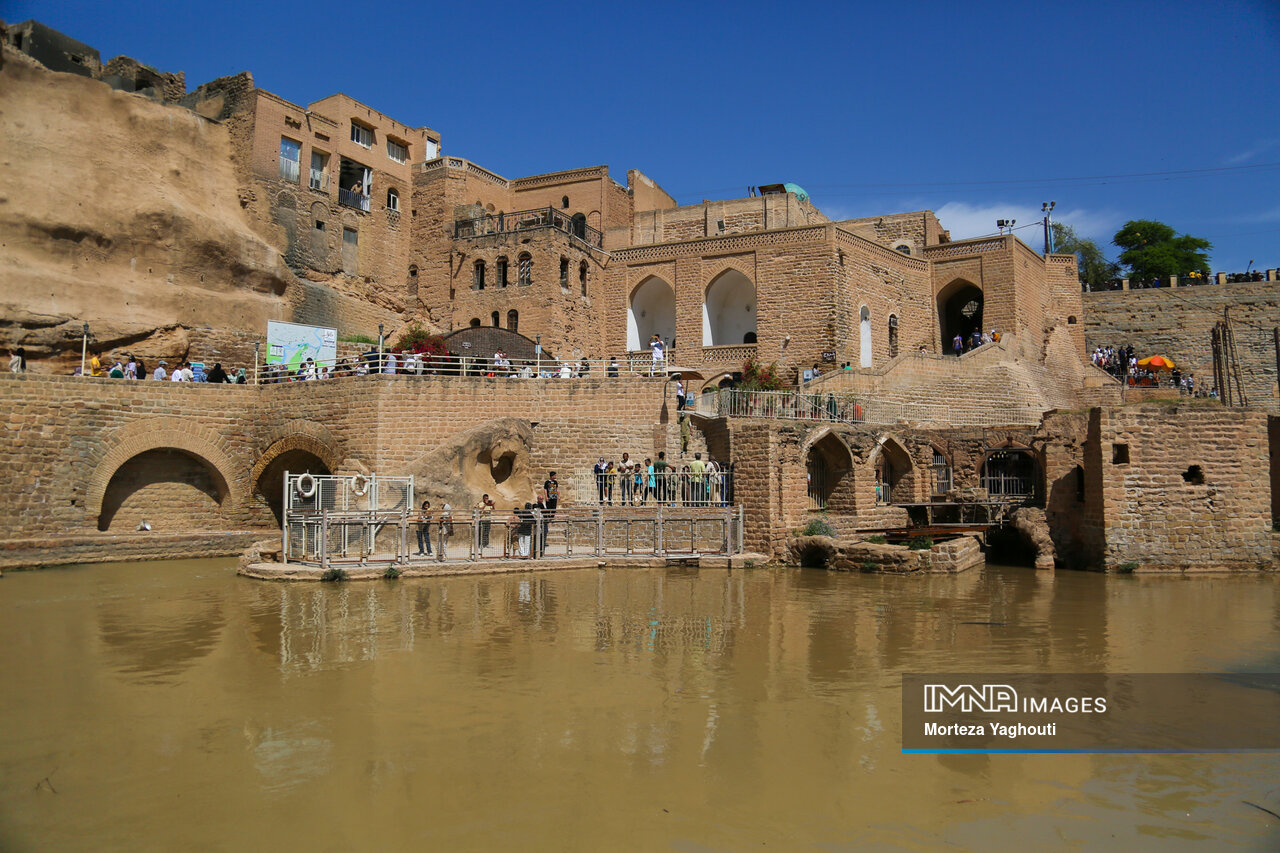
The Shadorvan Grand Weir forms part of the much larger Shushtar Historical Hydraulic System in Khuzestan. The system’s engineering traditions are considerably older than the Islamic period and, in its present form, date principally to the 3rd century CE, with elements built on earlier foundations. UNESCO inscribed the Shushtar system on the World Heritage List in 2009, describing it as an exceptionally complete hydraulic complex combining canals, weirs and other civil-engineering structures for water supply, irrigation, milling, transport and other purposes.
The fourth site, the historic hydraulic structures of Siraf in Bushehr province, demonstrates how water management enabled urban life in one of Iran’s most water-scarce coastal environments. Siraf was a major Persian Gulf port that reached particular prosperity during the 9th and 10th centuries. Archaeological research has documented wells, cisterns, aqueducts, drainage features and other systems associated with the collection, storage and distribution of water.
Recent interdisciplinary research has further examined Siraf as a deliberately planned water heritage landscape. Researchers have argued that its water infrastructure was integrated into the city’s urban development rather than being merely a series of isolated responses to aridity. The system incorporated water collection, storage and distribution within the settlement and surrounding landscape.
Geoarchaeological research has also shown that Siraf’s inhabitants relied heavily on harvesting and storing rainfall. Wells and cisterns on the hills overlooking the settlement captured and retained freshwater in an environment characterized by very low rainfall and episodic flash floods. Such infrastructure was essential for sustaining both domestic life and agriculture.
Together, the four structures span different periods, environments and engineering approaches: a Safavid bridge and hydraulic structure in Isfahan; a medieval barrage serving agriculture in Fars; a major ancient hydraulic complex in Khuzestan; and an integrated water-management landscape associated with the ancient and medieval port of Siraf.
Their selection illustrates the diversity of Iran’s long history of adapting engineering and settlement patterns to the availability and movement of water.
Your Comment