

Iran (IMNA) - For Shi'a Muslims, the martyrdom of Imam Ali ibn Musa al-Reza (AS), the eighth Imam of the Ahl al-Bayt, is one such moment — a sorrow that has endured for more than twelve centuries and continues to draw millions of hearts toward the holy city of Mashhad.
Imam Reza (AS) was born in Medina in 148 AH and inherited the mantle of Imamate after his father, Imam Musa al-Kadhim (AS). For nearly two decades, he served as a source of knowledge, wisdom, mercy, and spiritual guidance. His life was marked not by the pursuit of worldly power, but by devotion to God, the defense of truth, and service to His creation.
His profound knowledge became known far beyond the circles of his followers. Scholars of different faiths and schools gathered in his presence, and his debates became renowned for their depth, dignity, and intellectual clarity. Yet behind this radiance stood a political world increasingly threatened by his influence.
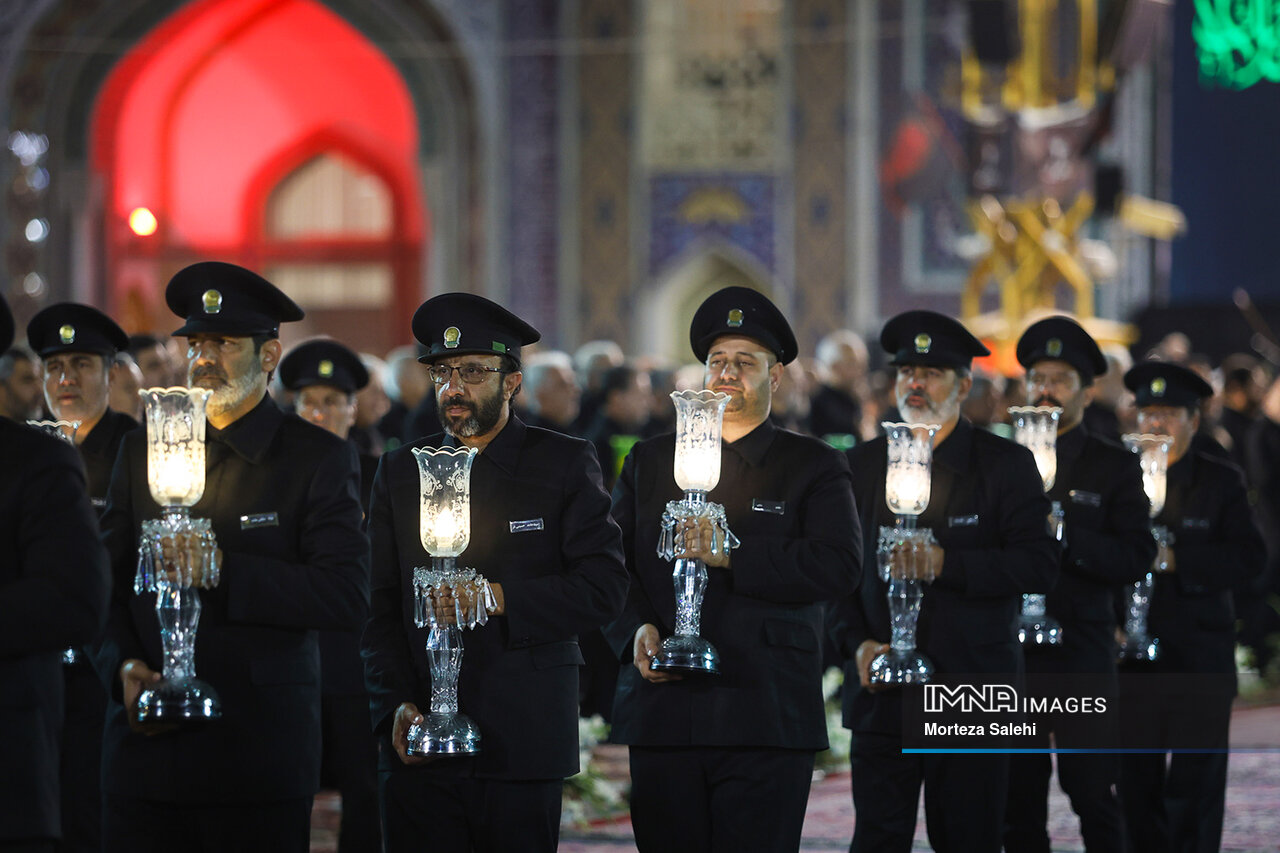
The Abbasid caliph Al-Ma'mun summoned Imam Reza (AS) from Medina to Khorasan and publicly appointed him as his successor.
But this appointment was not simply an act of honor. It was part of a political strategy intended to control the Imam and diminish the growing spiritual influence of the Ahl al-Bayt. Imam Reza (AS), however, refused to allow the authority of the caliphate to compromise the principles of Islam.
The more the Imam's knowledge, virtue, and popularity became evident, the more difficult it became for the ruling power to contain his influence.
And eventually, the palace that had placed a crown of succession upon him became the setting for his martyrdom.
The Last Days
Shi'a narrations preserved in works such as Uyun Akhbar Reza describe the Imam's final days as a period of profound suffering. One account relates that on the night before his martyrdom, Imam Reza (AS) informed those close to him that his return to his Lord was near and that Al-Ma'mun intended to poison him.
The following day, according to these narrations, the Imam was offered poisoned grapes and pomegranate.
He knew what awaited him.
Yet he faced his final hours with the same patience and submission to God that had defined his entire life.
His body weakened beneath the poison, but his spirit remained steadfast.
In the final moments of his earthly life, his son, Imam Muhammad al-Jawad (AS), came to him. The father embraced his son, and the final moments of the eighth Imam unfolded in an atmosphere of sorrow, divine trust, and profound spiritual tenderness. According to the Shi'a narration, Imam Reza (AS) then surrendered his blessed soul to his Lord.
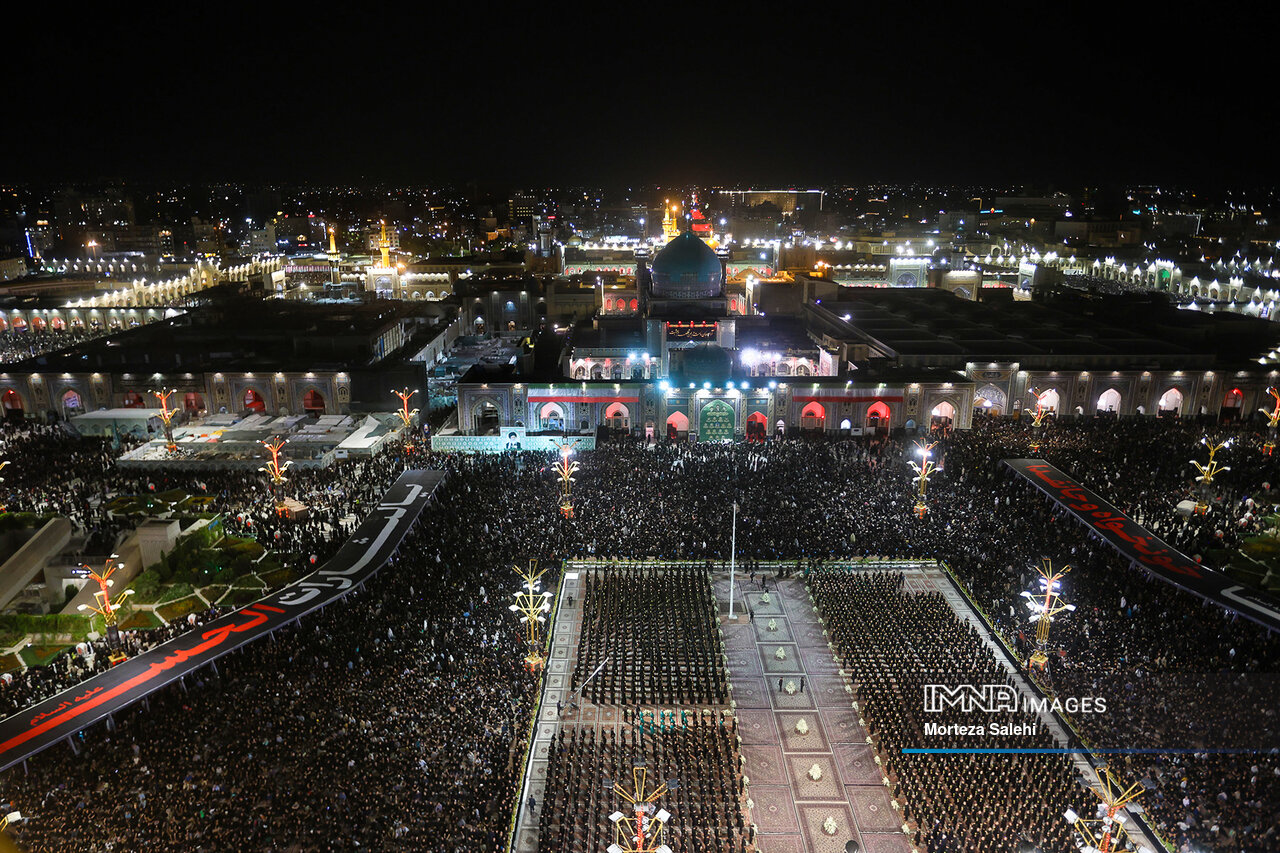
A Martyrdom That Became a Sanctuary
Imam Reza (AS) was martyred in 203 AH in Sanabad, near Tus, after being poisoned, according to established Shi'a accounts. He was buried beside the tomb of Harun al-Rashid. The place of his burial gradually became known as Mashhad al-Reza — the place of the martyrdom of Reza — and eventually gave its name to the city of Mashhad.
What began as a place of mourning became a sanctuary of hope.
Today, the golden dome of the shrine of Imam al-Reza (AS) rises above Mashhad, welcoming pilgrims from across Iran and from around the world. They come not merely to visit a tomb, but to stand before the resting place of an Imam whose life embodied knowledge, patience, generosity, and devotion to God.
The political power of Al-Ma'mun disappeared into the pages of history.
But the name of Imam al-Reza (AS) remained alive in the hearts of millions.
His palace was temporary.
His authority was spiritual.
His martyrdom became eternal.
And in the silence of every pilgrimage to his shrine, one message continues to echo:
Truth may be oppressed, but it cannot be erased.
Peace be upon Ali ibn Musa Reza (AS), the eighth Imam of the Ahl al-Bayt.
Peace be upon him on the day he was born, on the day he was martyred, and on the day he is raised again.
Your Comment