

Iran (IMNA) - When city leaders stay committed and both sides keep moving towards common goals, partnerships like twin agreements become a steady way to trade ideas, boost cultural understanding, and tackle real projects—anything from city planning and preserving old sites to improving schools, tourism, and economic growth.
Isfahan and Saint Petersburg: Two Cultural Capitals, One Shared Vision
Look at Isfahan and Saint Petersburg. They are a pair of sister cities in two neighboring countries with much potential. Yes, they are geographically apart and have different histories, but if you look closer, they actually have a lot in common. Both Isfahan and Saint Petersburg are the main cultural hubs of their countries, with a special kind of appeal that goes beyond their cities. People think of Isfahan and Saint Petersburg as symbols of their countries, places full of old buildings, art, and big ideas. Because these two cities have similar backgrounds, it seems natural for them to build a sister city partnership that is not just official, but also meaningful.
The process of their historical development resembles a broader narrative of identity. In the past, Isfahan was the capital of the Safavid Empire, and during that time Persian architecture, city planning, and painting reached their highest stage of development. The same is true of St. Petersburg, as for over 200 years the city was recognized as the capital of the Russian Empire, and the heart of the country for cultural and political affairs.
Today, these two cities are renowned for their unique urban landscapes, with masterpieces of world architecture such as Nagsh-e Jahan Square in Isfahan and the Church of the Savior on Spilled Blood in St. Petersburg among the finest examples of human skill.
The similarities between the two cities go further, as they were built around large rivers. The presence of the Zayandeh Rud River is considered one of the main reasons why Isfahan was selected to be the center of the Safavid Empire, as it provided a suitable urban texture to form a high-quality civilization. The bridges over the Neva River are the hallmark of St. Petersburg, the construction of which was also largely determined by the river. Thus, it can be said that both cities were built on rivers that are now essential parts of their development and identity. Despite the differences in the landscapes they were built on, the rivers played, and continue to play, a major role in the life of the city.
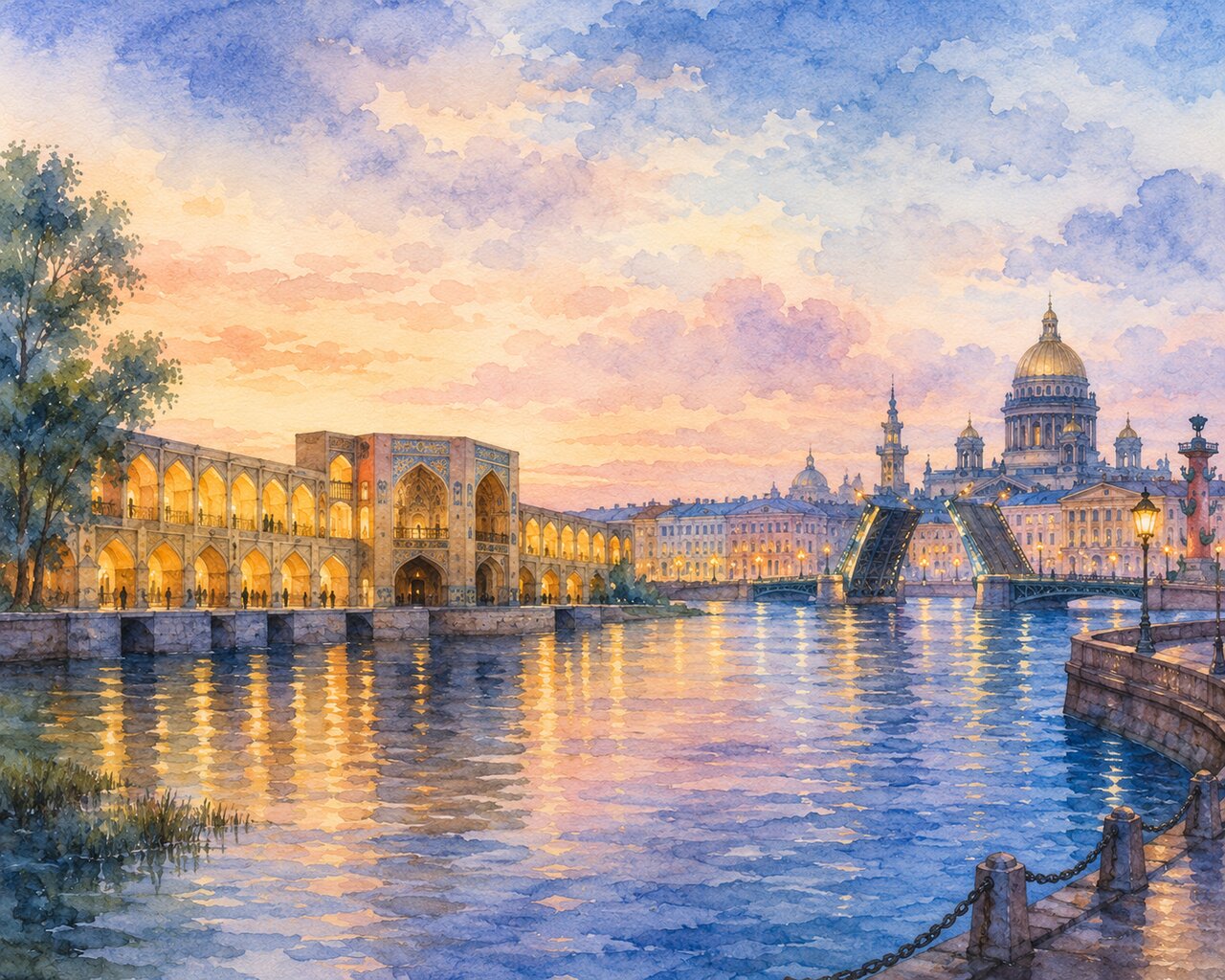
Strengthening Sister-City Ties Through Culture and Knowledge
Given these shared characteristics, culture is definitely the logical area to begin an effort for broader cooperation. Taking into account Isfahan's rich tradition in Persian-Islamic architecture, miniature painting, calligraphy, carpet weaving, enamel work, wood carving (Monabat Kari), and metal engraving, St. Petersburg, on the other hand, is internationally admired for its excellence in ballet, opera, music, literature, museums, and fine art.
Joint art exhibits, artist exchanges, festivals, and other cultural interactions would allow residents of these sister cities to learn about the varied traditions and, in so doing, become better acquainted with one another.
Beyond the cultural realm, a cooperative exchange can further stimulate academic interaction. The two cities are both hosts to major universities and research centers specializing in a range of fields, from architecture and urban development to engineering, medicine, archaeology, artificial intelligence, and cultural studies. Student and faculty exchanges, research collaborations, academic conferences and symposiums, and shared degree programs could stimulate research and provide a foundation for long-term professional and institutional ties.
These academic and cultural ties go hand in hand with another common priority, heritage conservation, that can work at the interface of a city’s history and its modern urban challenges. Both cities grapple with the challenges of conserving historic areas, hosting tourists, and reconciling modern growth with their age-old urban structures. Collaboration on the conservation of heritage sites, digital recording, restoration practices, or modern technology like 3D scanning could give both cities a lot to learn from one another.
Building the Future Together: Heritage, Tourism, and Urban Innovation
Heritage also presents a good opportunity to launch a collaborative tourism campaign. Instead of competing with each other, Isfahan and Saint Petersburg might promote themselves as complementary cultural destinations through their common past as former imperial capitals. Joint promotional campaigns, artistic and scientific partnerships among museums, familiarisation tours for tour operators and a shared approach to cultural exhibition would attract culturally curious tourists who could easily visit both cities as part of their trip.
More can be achieved through collaboration among cities. Although working in different administrative contexts, both cities have a wealth of experience in local governance, digital public services, transport management, heritage conservation, and sustainable urban development. For example, Isfahan has developed extensive experience in tackling water scarcity and restoring the Zayanderoud river to its natural state. On the other hand, Saint Petersburg is globally renowned for its experience in flood protection, waterfront management, and river engineering.
A knowledge-exchange program related to these sectors would greatly enhance urban resilience and management in both cities. The persistence of these connections requires an effective mechanism to turn them into genuine people-to-people relationships in addition to inter-city cooperation. Inter-city activities such as cultural festivals, youth summits, school twinning, student ambassador programs, volunteer activities, and annual events (e.g., Isfahan Week in Saint Petersburg and Saint Petersburg Week in Isfahan) could strengthen timeless bonds and foster greater understanding, especially among young people.
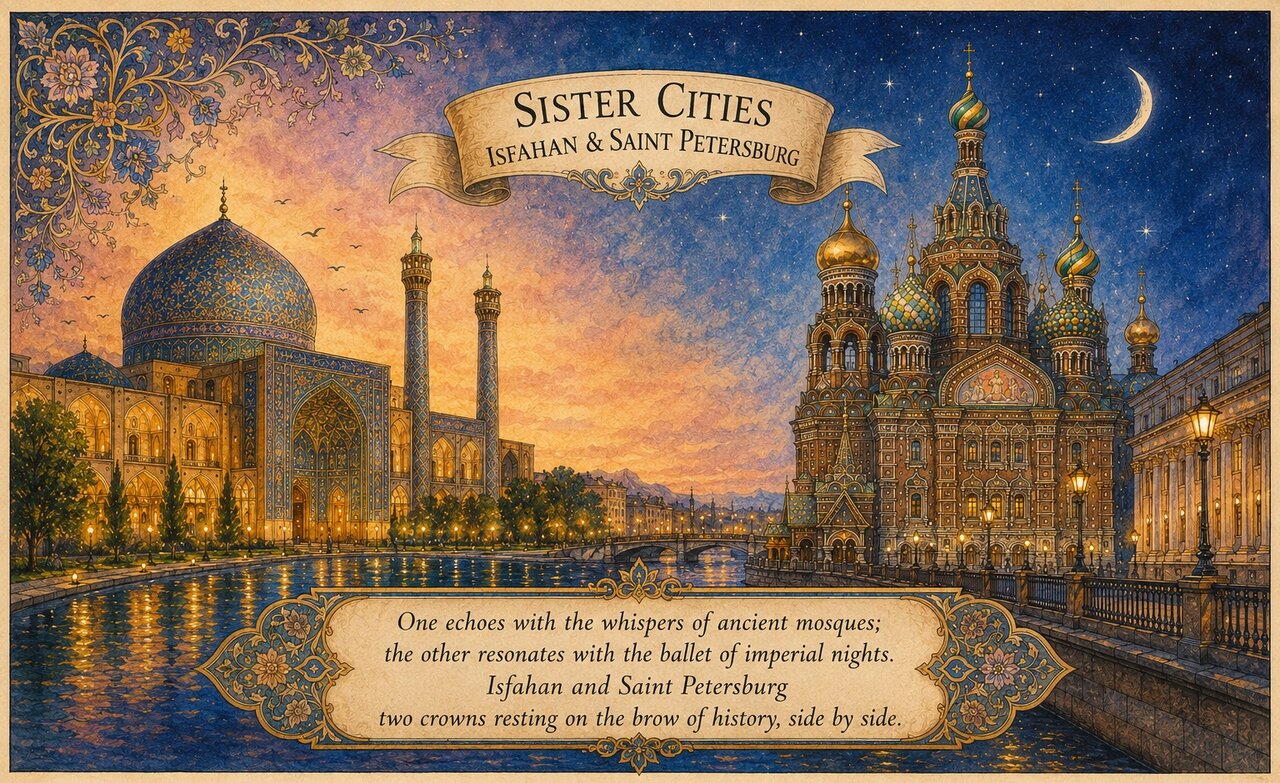
Economic and digital cooperation that specifically addresses areas such as tourism, the creative economy, handicrafts, information technology, the pharmaceutical industry, building materials, and urban services would create opportunities for businesses and entrepreneurs in both cities to meet. In parallel, a joint digital platform offering, for instance, virtual tours of city museums, online educational resources in both languages, university lectures, cultural listings, and live-streamed performances could provide avenues for continuous exchange, regardless of distance. In sum, the enduring success of the Isfahan–Saint Petersburg partnership lies in establishing an interconnected web that links the cities through institutions as diverse as municipal bodies, higher education institutions, museums, cultural centers, businesses, and NGOs.
By moving beyond a shared historical narrative towards tangible actions that touch all sectors from culture and education to urban development and economic exchange, Isfahan and Saint Petersburg can forge a vibrant and sustainable sister-city relationship, benefiting citizens and setting a precedent for municipal diplomacy in the twenty-first century.

Your Comment