
Iran (IMNA) - In an interview with Al Jazeera, Iran’s Foreign Minister Abbas Araghchi restated what he described as the country’s firm redlines in any talks with Washington. While emphasizing Iran’s commitment to these boundaries, he indicated that Tehran could show flexibility in other areas, including the scale and level of uranium enrichment.
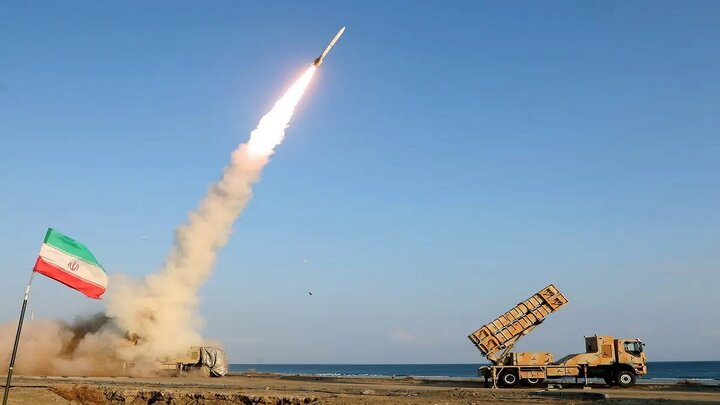
Araghchi stressed that Iran will neither negotiate over its missile capabilities nor agree to a complete halt in uranium enrichment. “Enrichment is our legitimate right and must continue. Even bombing failed to destroy our capabilities. We are ready to reach a reassuring agreement on enrichment,” he said, adding that “missiles are never negotiable, as they are a defensive matter.” He noted that Iran’s primary demand in return would be the lifting of economic sanctions.
The latest discussions were held in Muscat on Friday and were led by Araghchi for Iran and U.S. Presidential Envoy Steve Witkoff, alongside Donald Trump’s son-in-law Jared Kushner. The talks were conducted indirectly, with messages exchanged through Omani Foreign Minister Badr bin Hamad Al Busaidi, though some reports said the two sides briefly greeted each other in person, as had occurred in the previous round.
Earlier negotiations in April and May 2025 were derailed by a 12-day U.S.-Israeli bombing campaign against Iran. The fighting ended after Iranian missile strikes caused extensive damage in the occupied territories and hit a U.S. base in Qatar, prompting the United States and Israel to seek a ceasefire.
Former U.S. President Donald Trump later said he had been “in charge” of the campaign from the outset, claiming its goal was to “obliterate” Iran’s nuclear program. Analysts, however, have questioned those claims, arguing that such attacks could at most delay Iran’s nuclear activities by one or two years. They point to the killing of senior Iranian military commanders, attempted strikes on top political leaders, and efforts to target Iran’s Leader, Ayatollah Seyyed Ali Khamenei, as evidence that the broader objective was to destabilize and topple the Islamic Republic. During the conflict, Israeli Prime Minister Benjamin Netanyahu directly appealed to Iranians to protest against their government.
According to Iranian officials, Trump made another attempt to undermine the Islamic Republic last month. Treasury Secretary Scott Bessent said Trump engineered a dollar shortage in Iran, driving up inflation and triggering protests. While demonstrations were initially peaceful, intelligence reports cited by Iranian sources say they were later infiltrated by armed individuals linked to Mossad and the CIA, leading to widespread unrest and the deaths of about 2,500 people, including civilians and security personnel.
Throughout January, Trump repeatedly threatened military action against Iran and encouraged protesters to seize government institutions. Reports say those plans were ultimately abandoned after the unrest subsided and Iran warned that any new conflict would escalate into a regional war. Friday’s talks were arranged after several regional countries urged Tehran to give diplomacy another chance.
In his Al Jazeera interview, Araghchi said Iran’s nuclear issue could only be resolved through dialogue. “Washington attacked us and then returned to the negotiating table,” he said, adding that while no date or venue has been set for a second round of talks, both sides agree they should take place soon.
He also addressed continued U.S. military deployments in the Persian Gulf, warning that while Iran would not strike U.S. territory directly, it would target American bases in the region if attacked. Araghchi said he told U.S. representatives they faced two choices: war or diplomacy. “Our choice is diplomacy,” he said, “but we are ready for both scenarios.”
The United States maintains a broad military presence across West Asia, with permanent bases in Bahrain, Egypt, Iraq, Jordan, Kuwait, Qatar, Saudi Arabia, and the United Arab Emirates, alongside additional temporary sites. An estimated 40,000 to 50,000 U.S. personnel are stationed across at least 19 locations in the region.
Iran’s new Security Chief, Ali Larijani, appointed after the 12-day war, has previously said that Iran would target American personnel in any future conflict. Analysts have long argued that Washington would only halt pressure on Iran if it faced direct costs. They also note that the potential closure of the Strait of Hormuz, a move that could sharply drive up global oil prices, remains an option Iran has yet to employ.
Your Comment