
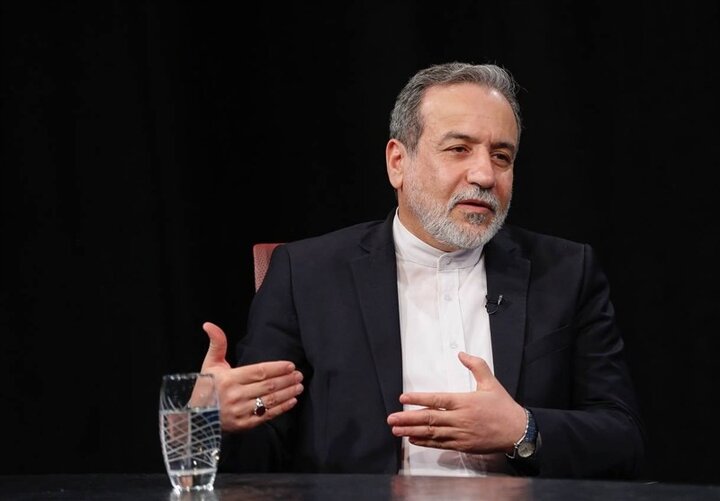
Iran (IMNA) - In an interview with Kyodo News, Araghchi stated that Iran's nuclear sites had been "bombarded, destroyed and heavily damaged" in what he described as "perhaps the biggest violation of international law" ever committed against a safeguarded nuclear facility under International Atomic Energy Agency (IAEA) monitoring.
Discussing the stalled nuclear negotiations with the United States, Araghchi said Iran remains open to diplomacy but only if it leads to a "fair and balanced" outcome. "It depends on the United States," he noted, emphasizing that Washington's demand for Iran to halt uranium enrichment has prevented progress.
Araghchi highlighted Japan’s extensive experience in dealing with nuclear crises, referencing the 1945 atomic bombings of Hiroshima and Nagasaki and the 2011 Fukushima Daiichi accident. He said Tokyo’s knowledge of environmental, medical, and technical safety measures could assist Iran in addressing the risks posed by recent attacks. Cooperation, he stressed, would focus strictly on technical safety rather than inspections, which fall under the IAEA’s mandate.
According to Araghchi, Iran is facing unprecedented safety and security challenges, including structural damage and potential radiation leaks following the June strikes. He argued that the attacks exposed a critical procedural gap within the IAEA regarding inspections of bombarded nuclear facilities.
Earlier this year, Iran and the IAEA reached a framework in Cairo to establish a mechanism for inspecting and stabilizing facilities damaged by military action. Araghchi said the process was undermined when the United States and three European parties to the 2015 nuclear deal moved to restore past UN Security Council sanctions.
Regarding future talks with Washington, Araghchi expressed skepticism, citing the US withdrawal from the 2015 accord and support for recent Israeli actions against Iran. He said Tehran is willing to negotiate if the United States adopts a "fair and mutually beneficial" approach. “Negotiation is different from dictation,” he added.
Araghchi said the primary sticking point remains Washington’s reluctance to recognize Iran’s right to peaceful nuclear technology, including uranium enrichment, under the Nuclear Non-Proliferation Treaty, to which Japan is a member. He noted that Iran is ready to accept limits on enrichment levels and centrifuge types, and that talks could proceed quickly once the United States takes reciprocal steps, including acknowledging Iran’s peaceful program and lifting sanctions.
Your Comment