
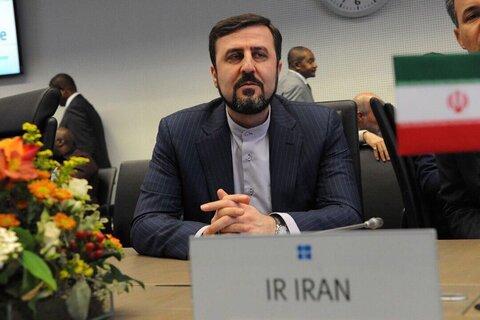
Iran (IMNA) – In a televised interview, Gharibabadi detailed Iran’s extensive diplomatic initiatives aimed at asserting the expiration of Resolution 2231 and countering what Tehran describes as the duplicity of Western countries and the United States. According to the Iranian diplomat, the three nations have affirmed that Resolution 2231 has officially expired and that member states are no longer bound by its related sanctions provisions.
Highlighting Iran’s diplomatic efforts, Gharibabadi referred to the recent meeting of the Non-Aligned Movement (NAM) foreign ministers in Uganda, where more than 121 member states confirmed that Resolution 2231 would expire on October 18—signifying broad international recognition of this legal interpretation.
He also cited a statement issued by 21 member states of the “Group of Friends in Defense of the UN Charter” in New York, which asserted that the unilateral sanctions reimposed by Western countries and the United States are legally invalid and carry no obligation for UN member states to implement.
According to Gharibabadi, the Russian Foreign Ministry has released a similar statement, reinforcing the position that the resolution has reached its conclusion. The forthcoming joint letter from Tehran, Moscow, and Beijing, he added, will officially inform the UN leadership that Resolution 2231 has ended and that all associated sanctions have lost their binding effect.
The senior diplomat underscored Iran’s continued efforts to consolidate international consensus around its legal stance, ensuring that the expiration of Resolution 2231 and the invalidity of unilateral Western sanctions are widely recognized.
Touching on the implications for Iran’s cooperation with the International Atomic Energy Agency (IAEA), Gharibabadi explained that, with the conclusion of the resolution, the IAEA Director-General will no longer be required to submit quarterly reports on Iran’s compliance with the Joint Comprehensive Plan of Action (JCPOA) to the agency’s Board of Governors.
Your Comment