
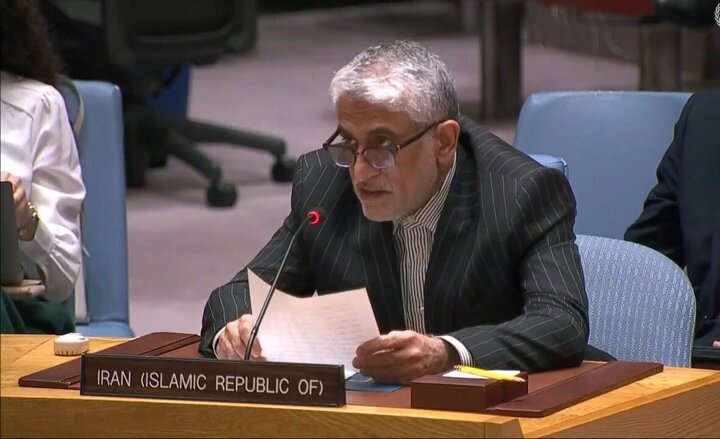
Iran (IMNA) - Addressing the UN Second Committee on Monday, Iravani referred to last week’s General Assembly session, where world leaders underscored the urgency of tackling global challenges through multilateralism, climate finance, and sustainable development. He noted that many participants also demanded an end to unilateralism and called for immediate action to stop the genocide in Gaza.
Emphasizing that development requires stability, cooperation, and equitable access to resources, Iravani said the failure of developed nations to deliver on their financial and technological commitments has severely hindered global progress. He warned that rising global military expenditures are diverting resources from urgent development priorities.
“The situation in the Middle East is extremely dire,” he said, adding that ongoing armed conflicts, prolonged occupation, and the genocide committed by the Israeli regime are clear outcomes of interventionist policies pursued by certain foreign powers. These factors, he explained, continue to obstruct regional development and deepen instability.
The envoy also criticized unilateral coercive measures that he said violate human rights, disrupt legitimate trade and investment, and undermine nations’ sovereignty. Such actions, he added, worsen environmental degradation and endanger vulnerable populations, including children, women, and the elderly.
Referring to recent events, Iravani recalled that on June 13, 2025, Israel, backed by the United States, launched large-scale military aggression against Iran and later targeted Iran’s peaceful nuclear facilities on June 22. He described these acts as blatant violations of the UN Charter and international law, deliberately targeting civilian infrastructure, hospitals, and media outlets — actions that threaten global peace and the Non-Proliferation Treaty.
Iravani further warned that the attacks could have transboundary environmental consequences due to the release of radioactive and toxic materials, endangering both human health and ecosystems. He stressed that such unlawful measures erode trust, weaken international cooperation, and distract the world from addressing shared challenges.
Concluding his remarks, Iravani said unilateralism today poses a greater threat than ever to peace, stability, and development. He urged the global community to reject these policies collectively and decisively, calling instead for genuine multilateralism, solidarity, and cooperation under the central role of the United Nations.
Your Comment