
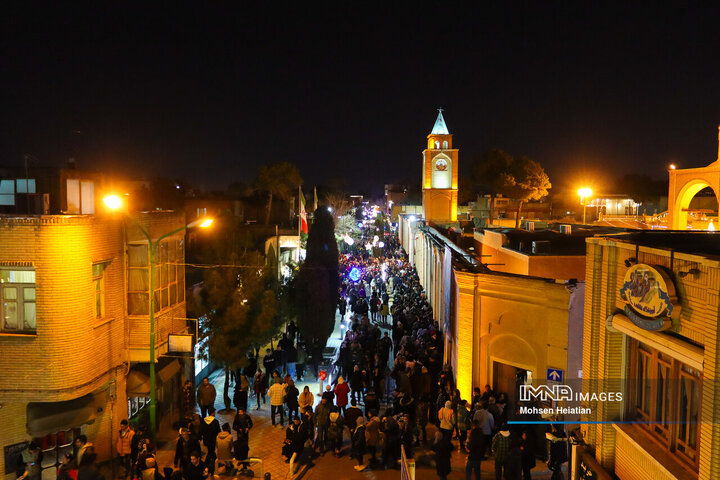
Iran (IMNA) - Originally established by relocating thousands of Armenian families from Old Julfa on the Aras River, this district flourished into a bustling hub where Persian traditions harmonized with Christian faith and global commerce.
More than mere displacement, Shah Abbas’s move strategically safeguarded the Armenian community from Ottoman incursions while harnessing their exceptional skills as merchants, artisans, and diplomats. Nestled south of the Zayandeh Rud River, New Julfa capitalized on the Armenians’ extensive trade networks stretching from Amsterdam to Calcutta and Venice. Armenian traders navigated between the Safavid Empire and European markets, exporting fine Persian silk and importing silver, spices, and luxury goods, bypassing Ottoman middlemen and cementing Isfahan’s role in early modern global trade.
The quarter’s architectural charm—ochre brick houses with carved wooden balconies, quiet courtyards, and narrow lanes—envelops visitors in a historic yet living world. At its heart, Vank Cathedral stands as a testament to this cultural blend. Unlike traditional Persian mosques, its design fuses Armenian Christian motifs with Safavid artistry, concealing a lavish interior of frescoes that merge biblical narratives with Persian miniature influences. The cathedral’s museum safeguards rare manuscripts, ancient Bibles, vestments, and one of Iran’s oldest printing presses, marking New Julfa as a cradle of Armenian heritage and early publishing in Iran.

More than a religious center, Vank Cathedral hosts the Armenian Genocide Memorial, built in the 1970s, honoring the victims of the 1915 Ottoman massacres. Alongside Vank, numerous other churches such as St. Mary’s, St. George’s, and Bethlehem enrich the quarter with delicate paintings and sacred relics, testifying to centuries of coexistence.
Remarkably, Armenians, a Christian minority in a predominantly Muslim country, practiced their faith openly under Safavid rule, fostering peaceful relations that endure in Isfahan today. The mingling of church bells and the call to prayer symbolizes a city where civilizations intersect with respect.
Though many Armenians emigrated in the 20th century, New Julfa remains a thriving cultural nucleus. Its revival includes charming cafés and restaurants housed in restored historic structures, where Armenian coffee aromas mingle with the hum of contemporary social life. Silver crosses, carpets, and miniature paintings fill local shops, attracting residents and tourists alike.
Muslims and Armenians share this urban landscape with continued cultural collaboration. Public celebrations of Christmas and Easter invite communal participation, reflecting a profound spirit of harmony.
New Julfa’s enduring legacy is one of resilience, prosperity, and identity preservation—an exceptional chapter in Isfahan’s storied history where faith, commerce, and artistry continue to shape the present.

Your Comment