

Iran (IMNA) — O’Keefe’s journey has taken him from the U.S. military to the front lines of some of the most contentious political debates of recent decades. He served in the Persian Gulf War and Iraq, later refused to carry out what he says was an unlawful order, and eventually left the military altogether.
What followed was a period of intensive reading and questioning that fundamentally reshaped his view of war, U.S. foreign policy and the narratives used to justify military intervention.
His activism later took him to the Gaza Freedom Flotilla in 2010, further deepening his involvement in the Palestinian cause.
O’Keefe has also traveled to Iran repeatedly. He says his first visit, around 15 years ago, challenged many of the assumptions about the country that he had encountered in Western media. Since then, he says, his interest in Iranian history, culture and society has only grown.
During his latest visit, he traveled to Minab and visited Shajareh Tayyebeh School, where the martyrdom of students during the recent US_Israeli war against Iran left a deep impression on him. He also visited Tehran's Revolution Square, witnessing firsthand the atmosphere among ordinary people during the conflict.
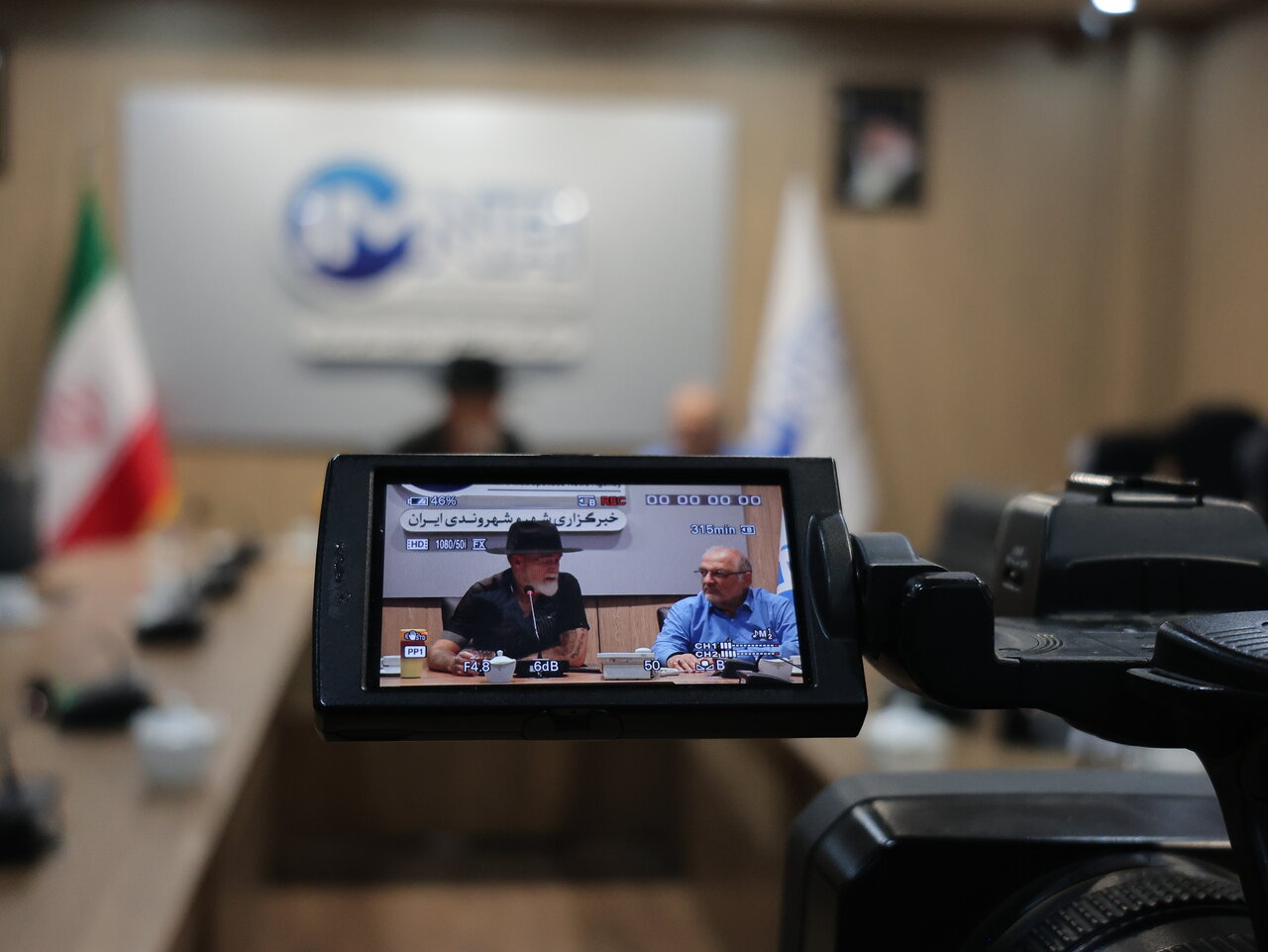
Now on his way to Isfahan, O’Keefe sat down with IMNA to discuss his transformation from a U.S. Marine into an anti-war activist, his experiences in Iraq and Gaza, the role of media in shaping public opinion, his views on Iran and Israel, and the growing role of artificial intelligence in warfare.
IMNA: You spent years in the U.S. military, including in the Marine Corps. What ultimately led you to turn against the very system you had once served?
O’Keefe: I should make one distinction first: I served in the U.S. Marine Corps, not the Navy. The two are closely connected historically, but they are separate branches.
At the time, I had a very good position. I was physically fit, I performed well, I had access to powerful weapons and I had a promising military career ahead of me.
But over time, I began asking a much more fundamental question: Who was I actually serving, and who benefited from the system I was part of?
Eventually, I came to the conclusion that I was serving people I did not believe I should be serving.
IMNA: So you did not leave because you were unable to continue your military career?
O’Keefe: No. Quite the opposite. I could have stayed. I was doing well and I had a future in the military, but something changed in me.
After leaving, life was not particularly easy. Some of the benefits I had received were taken away, and I faced difficulties even accessing certain things connected to my military service.
But that period also gave me the opportunity to start reading seriously. I read one book after another, and the more I read, the more I realized that many of the things we had been taught were not necessarily the whole story.
Looking back, I believe God saved me. Had things not unfolded that way, I might still be on the same path.
IMNA: What did your military training teach you about the people you were eventually expected to fight?
O’Keefe: One of the most important elements of preparing people for war is dehumanization.
If you want a soldier to shoot another person without hesitation, you have to make him stop seeing that person as a human being.
In our training, Arabs and Muslims were sometimes described in deeply derogatory terms. The objective was to make us look down on them, humiliate them and ultimately view them as an enemy rather than as human beings.
That is extremely dangerous. Once you stop seeing the person in front of you as a human being, it becomes much easier to kill.
IMNA: How did your experience in Iraq affect your thinking?
O’Keefe: Profoundly.
I was on the front lines in Iraq, so I saw the war from a very different perspective than someone watching it from a distance.
What struck me was the gap between what we experienced on the ground and what was later said about the war.
After weeks of bombing, many Iraqis had either fled or raised white flags. A lot of people simply had no capacity left to continue fighting.
And that left me with a very basic question: Why were we there in the first place?
IMNA: You have said that you once refused to obey an order because you believed it was unlawful. What happened?
O’Keefe: I refused because I believed the order was illegal.
Military personnel are not supposed to blindly follow every order. If an order is unlawful, a soldier has a responsibility to refuse it.
Other people carried it out. I chose not to.
That was a defining moment for me because I realized that a soldier is not simply an instrument. A soldier is also morally responsible for his own actions.
If everyone can simply say, “I was following orders,” then any politician or commander can start a war without anyone accepting responsibility for what follows.
The people making those decisions are often sitting behind desks. The president is behind a desk. The defense secretary is behind a desk.
But the consequences may be borne by a young soldier on the battlefield or by an entire family thousands of miles away.
That is why I believe a soldier's moral responsibility can never be outsourced.
IMNA: Some people may describe you as anti-American because of your views. Do you hate America?
O’Keefe: No. Not at all.
My problem is not with America or with ordinary Americans. My concern is with what I believe is true.
I oppose policies that I consider unjust or driven by war.
There are many Americans I know who are decent, good people and who strongly disagree with their government's policies.
So when I criticize the U.S. government or American foreign policy, I am not attacking the American people.
IMNA: Your activism has come at a personal cost. Have you ever become frustrated by the fact that mainstream media often refuse to give you a platform?
O’Keefe: I am not looking for applause.
If fame were my objective, I would probably say what people wanted to hear.
But the truth is not always popular.
Mainstream American media generally have little interest in inviting me onto their programs. That does not concern me very much.
I am not doing this for fame. I am saying what I believe needs to be said.
IMNA: You have also made controversial comments about September 11. What prompted you to speak out at the time?
O’Keefe: About a year after 9/11, I appeared on CNN and raised questions about the U.S. government's role in what had happened.
I knew those views would be controversial.
But my point was simple: people should be willing to ask questions rather than automatically accepting an official narrative as the only possible explanation.
IMNA: Do you think the public has become more willing to question official narratives, particularly since the war in Gaza?
O’Keefe: Absolutely.
The major difference today is that people have smartphones. They can record events themselves and share what they see directly.
What happened in Gaza was witnessed by people around the world in real time.
You could no longer rely on a single television network or official media outlet to tell everyone what was happening.
People saw the images for themselves. They heard directly from people on the ground.
And when what you see does not match what you are being told, naturally, you begin asking questions.
I think that has caused many Americans to reconsider things they had accepted for years.

IMNA: You have been a strong supporter of the Palestinian cause for years. What keeps you involved?
O’Keefe: I have been speaking about Palestine for many years, and I do not believe we can remain silent in the face of what is happening there.
If Iran were to go to war with Israel, I would be prepared to take up arms and stand alongside the Iranian people.
Frankly, I know many people around the world who hope Iran will take action. Someone, in my view, has to stand up to what I see as Israel's madness.
IMNA: You have visited Iran several times. How has your perception of the country changed?
O’Keefe: I first came to Iran about 15 years ago.
I had already studied the country extensively, but what I encountered here was very different from the picture I had seen in Western media.
It is extremely difficult to change the way most Americans think about Iran because their perceptions have been shaped so heavily by American media.
I am still learning about Iranian culture and civilization, and I find it fascinating.
Iran has an extraordinary civilization. Its people are highly educated and capable, with significant expertise in engineering, technology and military fields.
Once you actually spend time with a society, you realize that you cannot reduce an entire nation to a handful of stereotypes.
In Western media, Iran is often reduced to politics. But Iran is much more than politics.
It has a people, a history, a culture, universities, engineers, families and a complex society that cannot be captured by a few headlines.
Whenever I come here, I see that difference.
You have an extraordinary civilization, and you should be proud of it.
IMNA: During the recent war, Trump threatened to “wipe out” Iranian civilization. What was your reaction as an American who has developed a deep interest in Iran?
O’Keefe: To me, that statement is another example of what I see as America's collective madness.
We are gradually normalizing rhetoric and behavior that should never be considered normal.
George W. Bush once said, “If you are not with us, you are against us.” I criticized that at the time and said, essentially, that if I was not with him, then apparently I must be a terrorist.
Now we have reached a point where the U.S. president is openly using language that I consider genocidal.
But Israel's role in this process cannot be ignored either. The normalization of such rhetoric began there, with Palestinians being described in dehumanizing terms and calls for their complete destruction.
Now Trump is following the same trajectory.
I remember Dr. Marandi raising a similar question in one of his interviews: Why is it so difficult to find even one Western journalist or media outlet willing to openly challenge such statements?
I do not believe conventional weapons will be enough to defeat Iran. Iran has the ability to retaliate against Israel, and I hope it does.
IMNA: Before the recent conflict between Iran and the United States, did you expect Iran to be capable of resisting the U.S. in this way?
O’Keefe: Yes.
When I visited Tehran in 2023, I went to museums where Iran's missile and drone capabilities were displayed. I saw the equipment and spoke with people who were knowledgeable about these systems.
I know Iran is an ancient civilization with highly educated engineers and specialists. It has developed significant capabilities in the production of military equipment.
Those capabilities have changed the nature of warfare in ways that favor Iran.
So no, I was not surprised by what Iran demonstrated.
IMNA: You have also raised concerns about artificial intelligence and future warfare. What worries you most?
O’Keefe: We are moving life-and-death decisions closer and closer to machines.
Missiles, drones and other military systems can be integrated with artificial intelligence. The question is what happens when humans are no longer fully involved in the decision-making process.
That is frightening.
A war in which humans make the decisions is one thing. A war in which machines are making a significant share of those decisions is something entirely different.
We tend to think of AI simply as a tool — something we build to serve us.
But why should we assume that humans will always remain completely in control?
Hollywood has explored these scenarios for years, with machines eventually escaping human control.
People may dismiss that as science fiction, but once you introduce such systems into warfare, it becomes a very real question.
A machine making a mistake in an ordinary application is one thing. A military system making a mistake during a war is something else entirely.
IMNA: Much of what you have said over the years seems to come back to one central idea: questioning official narratives. Do you believe mainstream Western media still conceal important parts of the truth?
O’Keefe: People need to ask questions.
No media organization should ever be your sole source of truth.
That does not mean everything reported by mainstream media is false. It means you should verify what you are told.
Today, people have more tools than ever to do that. They can examine images, compare different sources and ask why different accounts of the same event exist.
IMNA: Do you see Gaza as a turning point in that process?
O’Keefe: Without question.
What happened was visible to the entire world.
People did not simply hear one government's version of events. They saw the images. They heard from people on the ground. They saw what was happening to families and children.
Once people witness something themselves, it becomes much harder to convince them that it did not happen.
IMNA: If you could go back and make the decision all over again, would you still leave the military?
O’Keefe: Yes.
If I had not made that decision, I would not be the person sitting here today.
My life might have been easier. I might have risen further in the military. I might have made more money.
But I would not have been myself.
At some point, I had to decide what kind of human being I wanted to be.
IMNA: After everything — the military, Iraq, Gaza, Iran and years of anti-war activism — if you had to reduce your entire experience to one message, what would it be?
O’Keefe: Ask questions. Always ask questions.
Before someone tells you who the enemy is, ask questions.
Before someone tells you why you have to fight, ask questions.
Before you pull the trigger, ask questions.
I used to think the most important thing for a soldier was knowing how to fight.
Today, I think something matters even more: knowing who you are fighting for and what you are fighting for.
Your Comment