

Iran (IMNA) —The story of the modern monument is closely linked to one of Tabriz’s most celebrated literary figures, Seyyed Mohammad-Hossein Behjat Tabrizi, better known as Shahryar. On the night of September 18, 1988, an ambulance carried the body of the 82-year-old poet from a Tehran hospital toward his birthplace.
By the time Shahryar returned to Tabriz, the memorial that would become his final resting place had taken 17 years to build. He was buried there according to his wishes, among hundreds of figures who had been laid to rest on the same ground since the medieval period.
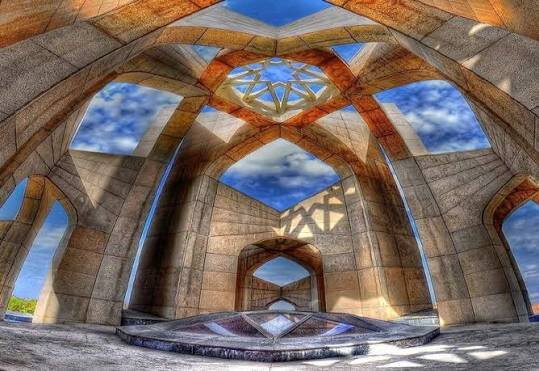
Today, visitors entering the complex walk up stone steps into a vast central chamber surrounded by smaller rooms. Verses by poets buried beneath the site cover the walls, accompanied by calligraphy and historical photographs. The result resembles an open book of literary memory rather than a conventional monument.
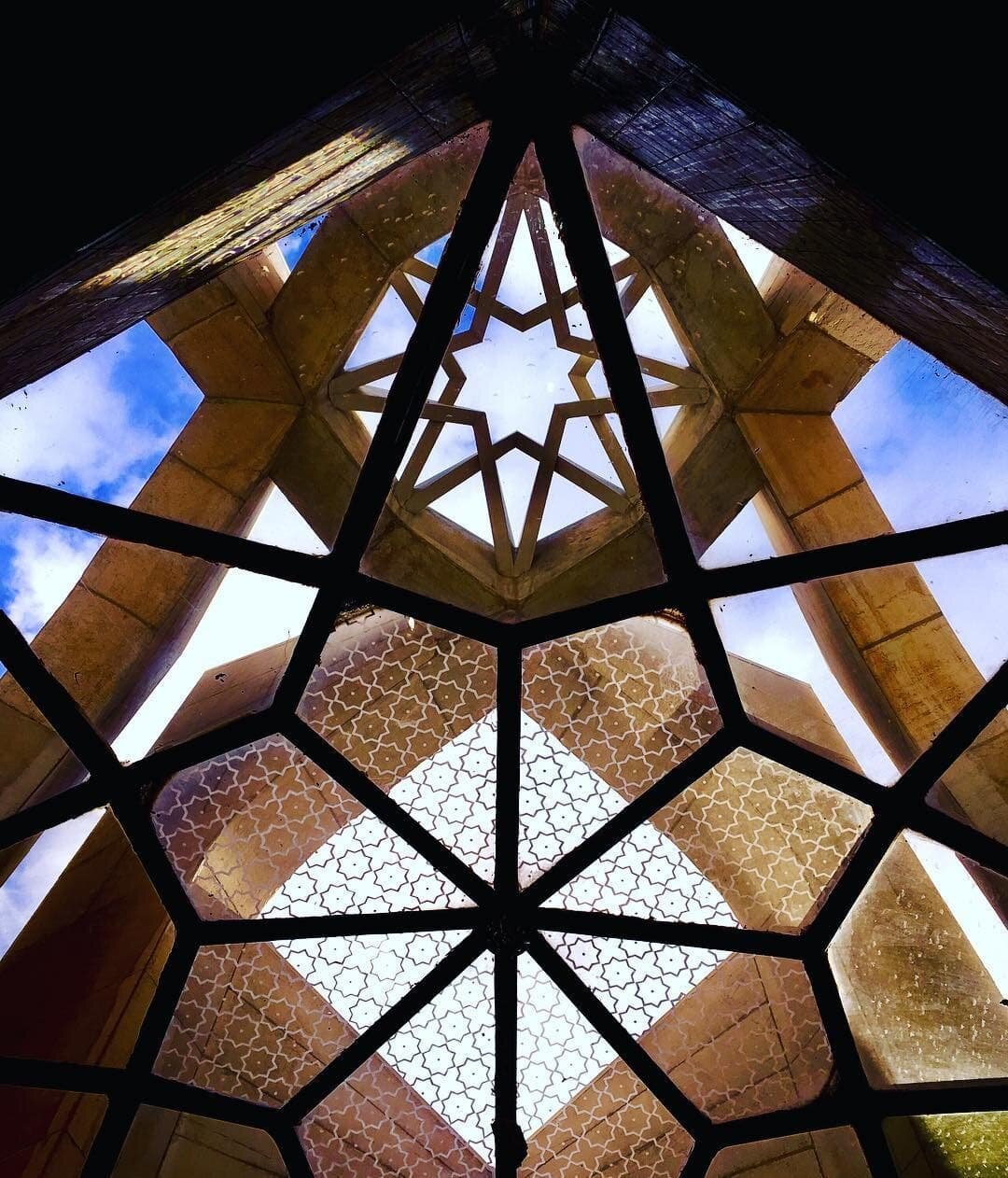
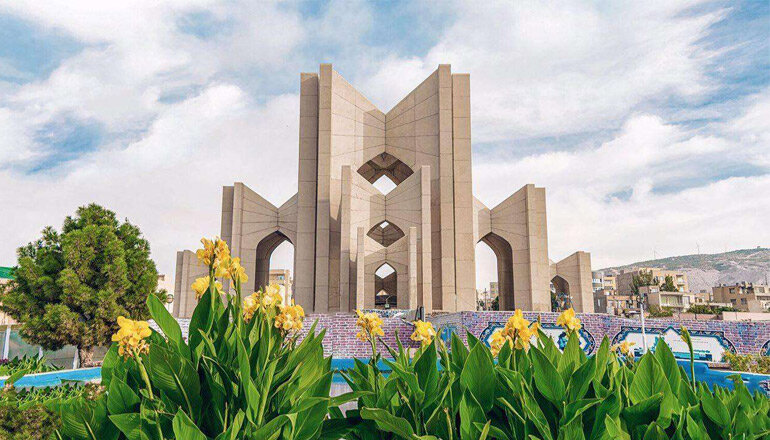
On the southern side, a reflecting pool offers a view of the structure's distinctive concrete arches. The approximately 30-meter-high steel frame, covered with prefabricated panels, has become one of Tabriz's recognizable modern architectural landmarks.
The complex also includes a bookstore, handicraft stalls and administrative offices, reflecting its continuing role as a cultural site rather than simply a memorial.
Although the present structure is less than half a century old, the ground beneath it carries a history stretching back around eight centuries. The cemetery survived major political upheavals, the Ottoman sack of Tabriz in 1514 and a series of earthquakes that damaged the city over several centuries.
The tradition of burying poets in the area dates to the 12th century, when Tabriz was at the center of the Atabakan of Azerbaijan. The city's literary reputation and royal patronage attracted poets from distant parts of the region.
Among those who came to Tabriz were Khaqani Shirvani from Shirvan in the Caucasus, Anvari Abivardi and Zahir al-Din Faryabi from Khorasan. All three died in Tabriz and were buried in the same area.
Their graves gradually transformed a modest burial ground into a place associated with literary heritage. Within a generation, chroniclers referred to it as Hazirat al-Shu'ara, or the Poets' Ground.
The tradition continued under successive dynasties, including the Ilkhanids, Jalairids and Aq Qoyunlu. Among those later buried there were Humam-i Tabrizi, the mystic poet Assar Tabrizi and Maghrebi Tabrizi.
The cemetery eventually brought together figures associated with both Persian and Azerbaijani Turkish literary traditions. Not everyone buried there was a poet; Aziz Khan Mokri, a 19th-century army general, is also among those interred at the site.
The earliest surviving written reference to the cemetery is attributed to historian Hamdallah Mustawfi, who mentioned it around 1339. Within two centuries of its earliest known burials, the site had already become part of the written history of Persian literature.
The cemetery suffered some of its greatest destruction in 1779 and 1780, when two major earthquakes struck Tabriz in successive years. Gravestones were toppled, inscriptions disappeared and many graves were lost from historical records. The site was subsequently abandoned, with its precise boundaries becoming unclear for almost two centuries.
A new chapter began in 1971, when a public design competition was announced in the newspapers Kayhan and Ettela'at and the literary magazine Yaghma. The objective was to create a memorial for the roughly 400 people believed to have been buried at the historic site.
Architect Gholamreza Farzanmehr won the competition with a steel-framed, concrete-clad design built around approximately 30 meters of interlocking arches. Construction began that year and continued for the following years before the building was completed in 1988.
That same year, Shahryar died and was buried at the newly completed memorial.
One of the most frequently expected names, however, is absent from the cemetery: Shams Tabrizi, the companion of Moulana Rumi and the figure associated with the Divan-i Shams-i Tabrizi.
Despite sharing Tabriz's name, Shams is not believed to have been buried at the Mausoleum of Poets. Born in Tabriz around 1185, he later left Moulana in Konya and settled in Khoy, approximately 150 kilometers northwest of Tabriz, where he died around 1248.
Many historians consider his grave in Khoy authentic. Konya also maintains a cenotaph honoring Shams within the Mevlevi tradition, although it is not believed to contain his remains. His tomb in Khoy has since been rebuilt as a copper-clad garden complex and has been put forward for UNESCO recognition.
The exact number of people buried at Maqbarat al-Shu'ara remains uncertain. Estimates range from around 320 to more than 400, largely because the earthquakes of 1779–80 destroyed graves and erased inscriptions. Researchers continue to identify graves that were absent from earlier records.
Shahryar was not the last person to be buried at the site. Poet Mahmoud Melmasi was interred there in 1991, followed by writer Aziz Dowlatabadi in 2009.
Today, the Mausoleum of Poets remains both a monument and an evolving archive of Tabriz's literary past. As researchers continue to document its inscriptions and identify those buried beneath its floors, the cemetery's precise history remains unfinished — a rare cultural record in which eight centuries of Iran's literary memory continue to emerge from the stones.
Your Comment